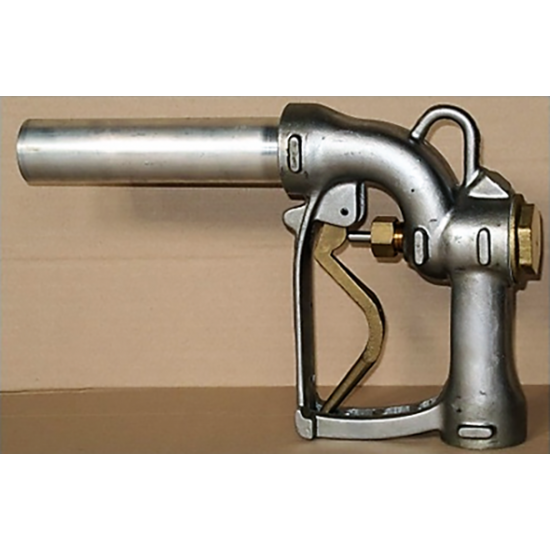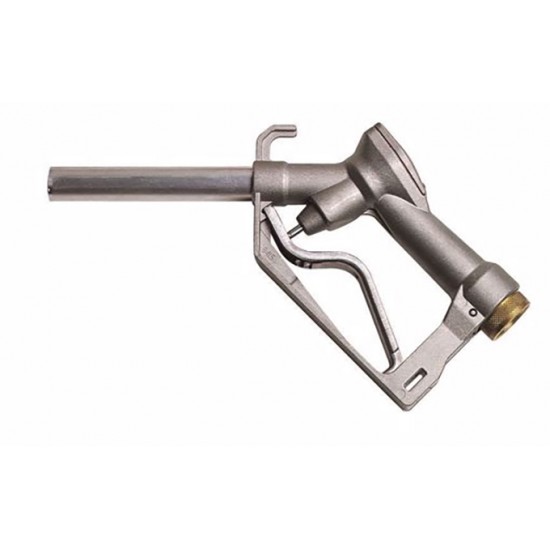
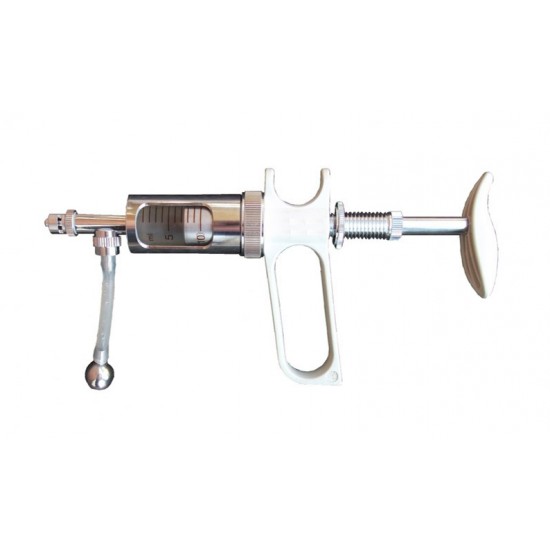
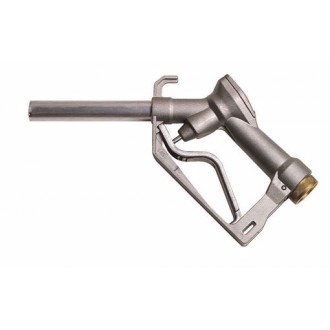

Manual solvent gun for 100 to 250 litres / minute
Manual Dispensing Guns for Industrial Liquids
Professional manual dispensing guns for liquids are designed for the transfer, controlled delivery and handling of liquid raw materials in pharmaceutical, cosmetic, chemical, biotechnology, food and industrial laboratories and production plants. Installed at the end of a pumping and transfer line, they allow the operator to manually control the start and stop of product delivery exactly where the liquid is required. Dispensing guns can be supplied or configured with specific materials according to the chemical and physical characteristics of the raw material and the customer's production requirements.
When integrated into a correctly sized transfer system, a dispensing gun can be used to move liquids from drums, tanks, containers or storage vessels towards processing vessels, production equipment, collection containers or other points of use. Selection should take into account chemical compatibility, viscosity, working temperature, pressure, required flow rate, seals, connections and the hygiene requirements of the process.
Dispensing guns can be integrated with industrial pumps for transfer and dosing, creating complete professional systems for handling and distributing liquid raw materials.
What are professional dispensing guns used for?
A manual dispensing gun gives the operator direct control over the final product outlet. When the gun is activated, liquid supplied through the transfer line is delivered into the required container, vessel or production equipment. When the operator releases the control, delivery can be stopped according to the characteristics of the selected system.
This solution is particularly useful when production requires operational flexibility and the dispensing point may change during the working cycle. Compared with a fixed pipe outlet, a handheld dispensing gun makes it easier to direct the liquid towards different containers and process equipment.
Typical applications include raw-material transfer, manual filling, feeding of preparation vessels, distribution of liquids between production stages and controlled delivery to different points within a laboratory or industrial plant.
Dispensing guns for pharmaceutical laboratories
In pharmaceutical laboratories and production facilities, liquid raw materials must be handled using components suitable for the characteristics of the product and the operating procedures of the plant. A professional dispensing gun creates a terminal delivery point that can be directly controlled by the operator during transfer operations.
The gun can be used to feed preparation vessels, transfer compatible solutions and distribute liquid raw materials to different areas of the production process. The correct configuration should be selected according to the characteristics of the product, cleaning procedures, available pressure and applicable hygiene requirements.
Particular attention should be given to all product-contact materials and seals. Compatibility should be assessed not only for the raw material being transferred but also for detergents, sanitising products and other fluids used during cleaning operations.
Applications in cosmetic laboratories and production
In cosmetic manufacturing, manual dispensing guns can be used for transferring and distributing many types of liquid raw materials and formulations, including oils, solutions, detergents, liquid bases, lotions and products with a viscosity compatible with the selected transfer system.
Direct control of delivery is useful in production environments where the same pumping system must feed different containers or where the operator needs to distribute variable quantities of product to different points of use.
For creams, gels and more viscous fluids, the complete circuit must be evaluated rather than considering the dispensing gun alone. Pump type, pipe diameter, hose length, connections and the internal passage of the dispensing terminal all influence the achievable flow rate and operating performance.
Dispensing guns for chemical laboratories and plants
Chemical compatibility is particularly important when selecting dispensing equipment for chemical applications. The gun must be chosen according to the composition and concentration of the substance being transferred, the operating temperature and the characteristics of the complete circuit.
The body, internal components, seals, fittings and all other product-contact parts must be evaluated for the specific raw material. A generic product name is not always sufficient to determine compatibility because concentration, formulation and temperature can significantly affect the behaviour of a chemical substance in contact with different materials.
A correctly selected configuration makes it possible to create a professional distribution system adapted to the actual requirements of the laboratory, pilot plant or industrial production process.
Manual dispensing guns for food production
In food-processing applications, dispensing guns can be used for handling liquid raw materials and products compatible with the materials selected for the equipment. Applications may include transfer into preparation vessels, tanks, containers and other process equipment.
When the dispensing gun comes into contact with food products, the suitability of all product-contact materials, seals and connections must be assessed for the specific application. Cleaning procedures and the substances used during washing must also be considered when selecting the configuration.
For dense or viscous food products, the internal passage should be sized to provide suitable delivery without creating excessive restrictions or unnecessary pressure losses.
Dispensing guns with industrial electric pumps
Manual dispensing guns can be integrated with industrial electric pumps to create transfer systems in which the pump moves the product through the pipe or hose while the operator controls delivery at the final point.
This configuration can be useful for repeated transfer operations or when liquid raw materials need to be moved between drums, tanks, containers and production equipment. The pump and dispensing gun should be selected as components of the same system, taking into consideration flow rate, pressure, viscosity and the characteristics of the transfer line.
The available pressure at the gun depends not only on the pump but also on pipe diameter, hose length, fittings, bends, elevation differences and product viscosity. Correct system sizing therefore improves delivery performance and operator control.
Dispensing guns with professional hand pumps
For laboratories, small batches, pilot production and occasional transfer operations, dispensing guns can be combined with professional hand pumps.
This configuration provides a simple solution for moving liquid raw materials when a motor-driven pump is unnecessary. The operator manually operates the pump to transfer the product and uses the dispensing gun to direct the liquid towards the required vessel or container.
Manual pumping systems can be particularly practical for laboratory work, sampling, pilot tests and low-volume production, provided that the pump, hose, fittings and dispensing terminal are compatible with the product and required operating conditions.
Dispensing guns with professional pneumatic pumps
Professional pneumatic pumps for liquid and viscous product transfer can be integrated with dispensing guns to create flexible systems for handling products with different flow characteristics and viscosities.
The configuration should be selected according to the available air supply, required flow rate, product properties, hose length, pressure conditions and characteristics of the dispensing terminal. Correct sizing of the complete circuit is essential for obtaining regular, manageable product delivery.
This type of system can be used in laboratories and production environments where flexible product handling is required and the operator needs direct control at the final dispensing point.
Materials selected according to the liquid raw material
Material compatibility is one of the most important factors when selecting a professional dispensing gun. There is no single configuration that is universally suitable for every pharmaceutical, cosmetic, chemical or food product.
The gun body, internal parts, seals, fittings and all components that may come into contact with the liquid should be evaluated according to the actual raw material. Compatibility must also be checked against detergents, cleaning solutions and other substances used within the transfer circuit.
For an appropriate technical evaluation, useful information includes chemical composition, concentration, viscosity, operating temperature, pressure, required flow rate and cleaning procedure. This allows the dispensing system to be configured according to the real operating conditions rather than the product category alone.
Dispensing low- and high-viscosity products
Viscosity directly affects the behaviour of a dispensing system. A free-flowing liquid requires different operating conditions from a dense or viscous formulation. As viscosity increases, pressure losses can become more significant and larger internal passages, appropriately sized hoses and a suitable pumping technology may be required.
Temperature must also be considered because it can substantially change product viscosity. Some raw materials flow easily at processing temperature but become considerably thicker when the production line cools down.
For this reason, the complete transfer system should be sized according to the actual viscosity under operating conditions. This approach helps maintain a practical flow rate while reducing unnecessary restrictions within the line.
Filtering liquids before dispensing
When required by the production process, the transfer line can also incorporate equipment for filtering and purification before the final dispensing point.
Filtration can be positioned upstream of the dispensing gun when the product needs to be treated before entering the next production stage. The type of filtration system should be selected according to the liquid, the particles or contaminants to be retained, the viscosity and the required flow rate.
Integrating pumping, filtration and manual dispensing into a coordinated system can simplify product handling and create a more complete process solution for laboratories and production plants.
How do you choose a professional liquid dispensing gun?
The selection process should begin with the characteristics of the liquid. Important information includes chemical composition, viscosity at the actual operating temperature, required chemical resistance and the possible presence of suspended particles. The required flow rate, pressure, pipe or hose diameter, connections and operating method should then be considered.
It is also important to determine whether the system will use an electric, pneumatic or manual pump and whether the dispensing gun will be operated occasionally or frequently throughout the production cycle.
Evaluating the complete transfer system helps prevent unnecessary flow restrictions, unsuitable materials and poor delivery performance. The dispensing gun should therefore be considered as one component of an integrated liquid-handling system.
Main advantages of professional manual dispensing guns
- Direct operator control of product delivery.
- Flexible handling of liquid raw materials.
- Suitable for feeding different containers and process vessels.
- Integration with electric, pneumatic and manual pumps.
- Materials selectable according to the liquid being processed.
- Suitable for laboratories, pilot plants and industrial production.
- Applications in pharmaceutical, cosmetic, chemical and food processing.
- Integration with filtration and purification systems.
- Solutions for different production volumes and process requirements.
- Custom configurations according to the application.
Cleaning and maintenance
The dispensing gun should be included in the cleaning procedures established for the complete transfer line. Product residues inside the body, outlet or fittings can affect subsequent operations and should be removed using methods compatible with the materials of the gun and the rest of the system.
Seals, connections, the opening and closing mechanism and product-contact surfaces should be inspected periodically. Signs of wear, leakage, deterioration or abnormal operation should be investigated before continuing production.
Cleaning agents should always be checked for compatibility with the dispensing gun materials, since an unsuitable detergent or solvent may damage seals or other components even when the production liquid itself is compatible.
Why choose Ariacqua?
Ariacqua supplies professional solutions for pumping, transferring and dispensing liquid raw materials in pharmaceutical, cosmetic, chemical, biotechnology, food and industrial laboratories and production facilities. Dispensing guns can be integrated with pumps, hoses, fittings, filtration equipment and other process components to create complete systems tailored to specific production requirements.
Technical evaluation of the liquid and operating conditions helps determine the most appropriate materials, pumping technology, connections and system configuration, providing a solution designed around the actual production process.
Frequently asked questions about liquid dispensing guns
What is a manual liquid dispensing gun used for?
A manual liquid dispensing gun is used as the terminal component of a transfer line, allowing an operator to directly control the delivery of a liquid raw material at the point of use. The product is generally moved by a pump through a hose or pipeline, while the dispensing gun allows it to be directed into a container, tank, preparation vessel or process machine. This configuration is useful in pharmaceutical, cosmetic, chemical, food and industrial laboratories where the same transfer system may need to serve different receiving points. Compared with a fixed outlet, a handheld gun provides greater operational flexibility and allows the operator to manage the start and stop of delivery directly at the destination. The complete configuration should always be selected according to the liquid because viscosity, temperature, pressure and chemical compatibility influence the performance of the system. Pump, hose, fittings and dispensing gun should therefore be considered together rather than as independent components.
Which liquids can be handled with a professional dispensing gun?
The range of suitable liquids depends primarily on the materials used in the dispensing gun and on the technical characteristics of the complete transfer system. Many liquid raw materials used in pharmaceutical, cosmetic, chemical, biotechnology, food and industrial processes can potentially be handled, provided that the selected configuration is compatible with the specific product. Suitability should not be determined only by the industry in which the product is used, because two liquids from the same sector can have very different chemical properties, viscosities and operating temperatures. Before selecting the equipment, it is therefore useful to know the chemical composition, concentration, viscosity under actual process conditions, temperature, required pressure and cleaning substances. For viscous liquids, the internal passage and pump performance should also be evaluated. Using real process data makes it possible to choose a more appropriate combination of materials and dimensions and reduces the risk of chemical incompatibility or poor dispensing performance.
Which pump should be used with a liquid dispensing gun?
The appropriate pump depends on the liquid, viscosity, required flow rate, pressure, transfer distance and frequency of operation. Industrial electric pumps can be suitable for repeated transfers and processes where an appropriate electrical supply is available. Pneumatic pumps provide another professional solution for many liquid-handling applications, including selected viscous products, while hand pumps can be useful for laboratories, small batches, pilot operations and occasional transfers. There is therefore no single pumping technology that is universally preferable. The pump should be selected together with the dispensing gun and the complete transfer line. Hose length and diameter, bends, fittings, elevation differences and product viscosity all generate pressure losses and influence the pressure available at the dispensing point. Evaluating the complete hydraulic circuit helps obtain the required delivery performance without unnecessarily oversizing the pump or selecting a dispensing terminal that restricts the product flow.
Can dispensing guns be used in pharmaceutical, cosmetic and food laboratories?
Yes, dispensing guns can be used in pharmaceutical, cosmetic and food laboratories and production facilities when their materials, configuration and operating characteristics are suitable for the specific application. In these industries, particular attention should be given to all surfaces that come into contact with the product, including seals, internal components and fittings. Cleaning and, where applicable, sanitising procedures should also be considered during equipment selection. A dispensing gun can be used to feed preparation vessels, transfer raw materials, perform manual filling operations or connect a pumping line flexibly to different points of use. When the product is viscous or particularly sensitive to process conditions, correct system sizing becomes even more important. In applications with specific hygiene requirements, ease of cleaning and inspection can be just as important as the ability to transfer the liquid itself, so the complete production and cleaning cycle should be considered before selecting the final configuration.
How should materials and seals be selected for a dispensing gun?
Materials and seals should be selected according to their compatibility with the raw material and with every substance that may contact the equipment during operation and cleaning. A reliable evaluation should consider chemical composition, concentration, working temperature, pressure, frequency of use and the detergents or cleaning solutions used in the system. A generic product description may not provide enough information. A liquid may be compatible with the main body of the dispensing gun while being unsuitable for a particular seal material, or its behaviour may change considerably as temperature or concentration increases. The complete product-contact path should therefore be considered, including the gun body, internal components, seals, hose and fittings. This approach helps create a transfer line that is more appropriate for the actual laboratory or production process, reduces the risk of premature component deterioration and facilitates the management of cleaning and maintenance operations.
Can a manual dispensing gun provide accurate dosing?
A manual dispensing gun is primarily intended to control the start, stop and direction of product delivery. The quantitative accuracy achievable depends on the configuration of the complete system. When repeatable quantities or precise volume measurement are required, it may be necessary to integrate dedicated metering, measuring or dosing equipment. An operator can manually stop the flow when a container reaches the required level, but this should not automatically be considered equivalent to a calibrated volumetric dosing system. The correct solution depends on the tolerance required by the production process. For a straightforward transfer operation, manual control may be sufficient, while repetitive filling or formulation processes in which the quantity is critical generally require a dedicated measurement or dosing solution. The stability of the flow generated by the pump also affects repeatability, which is why pump performance, pressure conditions and the dispensing terminal should be assessed together.
Can dispensing guns handle viscous liquids, creams or gels?
They can be used with selected viscous products when the complete system is correctly designed for the required viscosity. A viscous liquid produces greater pressure losses than a free-flowing product and may require a suitable pump, larger-diameter hoses and a dispensing gun with an adequate internal passage. Temperature should also be considered because many raw materials become less viscous when heated and significantly thicker when the equipment cools down. The technical evaluation should therefore use the viscosity under actual production conditions rather than relying only on a generic product description. Cleaning is another important consideration: creams, gels and other viscous materials can leave more residue inside the dispensing terminal and fittings. The system should consequently be evaluated not only for its ability to deliver the product during production but also for drainage, cleaning and maintenance at the end of the process cycle.
What information is needed to select the correct dispensing gun?
To identify an appropriate dispensing gun, it is useful to provide detailed information about both the product and the transfer process. Important data include the type and chemical composition of the liquid, viscosity at working temperature, minimum and maximum temperature, available pressure, desired flow rate, possible suspended particles and frequency of operation. Information about the pump, hose diameter and length, fittings and required dispensing method is also important. For pharmaceutical, cosmetic and food applications, cleaning procedures and any specific requirements for product-contact materials should be considered. When the dispensing gun must be integrated into an existing plant, photographs, dimensions and details of the available connections can simplify the technical evaluation. Collecting these parameters makes it possible to evaluate the dispensing gun as part of the complete transfer system and select a configuration that is genuinely suited to the intended process.
Customized Professional Equipment & Tailor-Made Solutions
We supply high-quality professional equipment and customized solutions designed to meet the specific needs of every customer. Our experienced team provides expert support in selecting the most suitable products, offering reliable solutions, technical assistance and tailor-made configurations for companies, laboratories, industrial applications and professional environments.
Contact us for product information, personalized advice and professional support in choosing the ideal equipment for your business requirements.
Enabled filters:
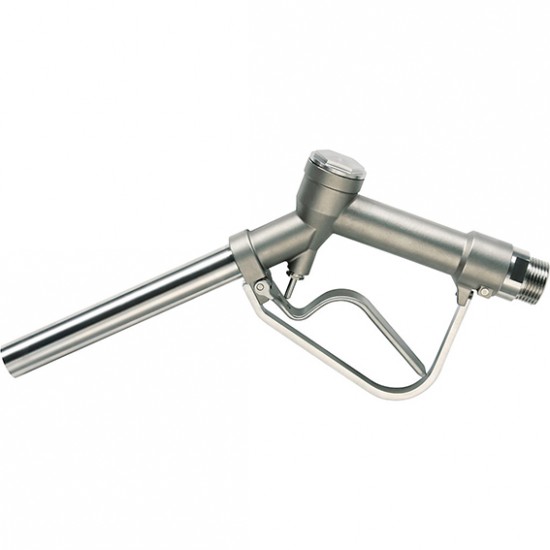
Stainless steel manual nozzle 40 litres/minute
Stainless steel manual nozzle 80 litres/minute