Request Information on WhatsApp
DOWNLOAD 'MEASURING INSTRUMENTS' LINE CATALOGUE FROM HERE
Download our complete...
Price
€ 1,849





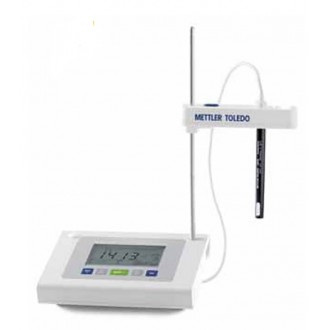
Professional conductivity meters are instruments designed to provide fast, reliable and reproducible measurements of the electrical conductivity of liquids and solutions. They are widely used in pharmaceutical, galenic, cosmetic, chemical, biotechnology, nutraceutical, food and research laboratories for checking water, raw materials, formulations, intermediate products and process fluids.
Thanks to intuitive operation, professional conductivity meters can provide high-quality measurements with the simple press of a button, making routine analysis easier and reducing the possibility of operator error. Conductivity measurement can be used to monitor water quality, compare different solutions, check changes in ionic concentration and support process control during preparation, transfer, cleaning and production.
Conductivity meters are part of the range of professional laboratory measuring instruments and can be integrated into quality-control, production and research workflows.
Electrical conductivity describes the ability of a liquid to carry electrical current through the ions present in the solution. In general, a higher concentration of mobile ions results in a higher measured conductivity.
The value depends on the type and concentration of ions, temperature, solvent composition and other physical and chemical characteristics. Conductivity is therefore particularly useful for comparing samples, monitoring processes and checking water and solution quality.
The measurement does not directly identify which substances are present, but it provides a quantitative indication of the total conductive behaviour of the sample.
A professional conductivity meter rapidly measures the conductivity of a sample and provides a numerical result that can be used for laboratory or process control.
It can be used to check the quality of water, compare solutions, monitor rinsing operations, follow changes in ionic concentration and verify the repeatability of a production process.
The measurement becomes particularly useful when testing conditions such as temperature, calibration, sample preparation and cell cleaning are standardised.
In pharmaceutical laboratories, conductivity can be measured in water, process solutions, washing liquids and other compatible samples.
The measurement can help identify changes in ionic content and compare samples with reference values established by internal quality procedures.
Conductivity meters can be used in environments dedicated to pharmaceutical, cosmetic and R&D production, supporting analytical control during different stages of preparation and manufacturing.
In cosmetic laboratories, conductivity measurement can be useful during the development and control of aqueous formulations, detergents, solutions, cleaning products and other samples where ionic content is a meaningful process parameter.
Conductivity can be used to compare batches or monitor changes caused by the addition of soluble ingredients and salts.
The value must always be interpreted in the context of the formulation because not every cosmetic product is characterised effectively by conductivity alone.
In chemical laboratories, conductivity meters are used to analyse aqueous solutions, reagents, mixtures and samples containing ionic species.
The measurement can support preparation, dilution, washing and process-control operations, providing a rapid quantitative indication of the electrical characteristics of the solution.
Temperature, concentration, ion type and sample matrix should always be considered when comparing results obtained at different times.
One of the most common uses of a conductivity meter is water monitoring. Water containing relatively few dissolved ions normally has a lower conductivity than water containing a higher concentration of dissolved salts and other ionic species.
Conductivity can therefore be used as a rapid indicator for process water, treated water and rinsing-water control.
It does not replace a complete chemical or microbiological analysis, but it can quickly identify changes that may require further investigation.
In washing, rinsing and cleaning operations, conductivity can be used to distinguish between clean water, detergent solutions and rinsing liquids containing residual ionic substances.
By monitoring the conductivity value during rinsing, the operator can follow the progressive reduction of dissolved residues and compare the final liquid with the process reference value.
For this application, the acceptance criterion and measurement temperature should be defined according to the actual cleaning procedure.
Professional instruments are designed to simplify daily operation. Once the sample has been prepared and the conductivity cell has been positioned correctly, measurement can be started rapidly through simple and intuitive controls.
This is particularly useful in laboratories where many samples are analysed each day.
Automatic functions can simplify the procedure, but correct calibration, rinsing, cell cleaning and sample preparation remain essential for reliable results.
Temperature has a significant influence on conductivity. In many solutions, increasing temperature increases ionic mobility and therefore increases the measured conductivity value.
For this reason, professional conductivity meters may use temperature probes and automatic temperature-compensation systems to report values at a defined reference temperature.
When different samples are compared, the measurement temperature should either be consistent or correctly compensated.
Automatic temperature compensation allows the instrument to adjust the measured conductivity according to a selected reference temperature and compensation model.
This can make it easier to compare samples measured at slightly different temperatures.
However, the relationship between conductivity and temperature is not identical for every solution, so the compensation model should be appropriate for the sample being analysed.
Calibration verifies and adjusts the response of the measuring system using standard solutions with known conductivity.
The required calibration frequency depends on the level of accuracy required, frequency of use, sample type and laboratory procedures.
Conductivity standards should be stored correctly and protected from contamination, evaporation and other factors that could alter their reference value.
The conductivity cell has a specific cell constant that affects the measuring range and performance of the system. Different cell constants may be more suitable for low, medium or high conductivity values.
For reliable measurements, the selected cell should match the expected conductivity range of the samples.
An instrument used for very low-conductivity water may therefore require a different cell configuration from one used with concentrated process solutions.
Some professional meters can use conductivity measurements to calculate or estimate additional parameters such as total dissolved solids, or TDS, and salinity.
It is important to distinguish between direct conductivity measurement and values calculated through conversion factors. The relationship depends on solution composition and is not identical for every sample.
For professional quality control, the operator should know which parameter is being measured directly and which values are derived from conductivity.
Conductivity generally increases as the quantity of mobile ions in a solution increases. However, the relationship is not necessarily linear, especially at higher concentrations.
Different ions also have different mobilities and therefore contribute differently to total conductivity.
Conductivity meters are therefore particularly effective for comparing similar samples or following changes within the same process, but should not be used alone to determine the full chemical composition of an unknown solution.
In R&D laboratories, conductivity can be used to compare formulations, evaluate the effect of salts or ionic ingredients and monitor changes during product development.
The value can be considered alongside pH, temperature and other analytical parameters to obtain a more complete picture of formulation behaviour.
Using consistent measurement procedures makes it easier to compare experimental samples with subsequent pilot and production batches.
Conductivity can be checked on samples collected while liquids are transferred from one vessel to another.
Industrial pumps for transfer and dosing move liquids between process stages, while sampling and analytical measurement allow their characteristics to be monitored.
The sampling point should be selected so that the collected sample accurately represents the product being transferred.
Conductivity can be measured before or after a filtration stage when required by the process or quality-control procedure.
Lines equipped with AISI 316 stainless steel pressure filters can include sampling points for checking product parameters at different stages of treatment.
Mechanical filtration does not necessarily change conductivity because conductivity is mainly associated with dissolved ions. The result should therefore be interpreted according to the actual function of the filtration stage.
In quality-control systems, conductivity can be used as a rapid parameter for comparing raw materials, solutions and intermediate products with established reference values.
For meaningful comparison, sample temperature, preparation, cell type, calibration and stabilisation time should be standardised.
Recording the conductivity value together with the measurement conditions makes the result more useful for traceability and batch comparison.
Before measurement, the cell should be clean, correctly conditioned and, when required, the instrument should be calibrated.
The cell is immersed in the sample while avoiding trapped air bubbles around the sensitive areas. The operator should wait for the reading to stabilise before recording the value.
After measurement, the cell should be rinsed and maintained according to the requirements of the selected measuring system.
Deposits, residues and contamination on the conductivity cell can alter the behaviour of the measuring system and reduce the reliability of the result.
The cleaning procedure should be compatible with the cell materials and with the type of product being analysed.
Laboratories handling very different samples may benefit from a standardised cleaning procedure to reduce carryover between measurements.
When moving from a highly conductive or concentrated solution to a sample with very low conductivity, even small residues from the previous sample can significantly affect the next measurement.
For this reason, the conductivity cell should be rinsed carefully. In some applications, an additional rinse with a small quantity of the next sample can also be useful.
This is particularly important when measuring low-conductivity process water or purified-water samples.
Depending on the application, conductivity meters may be available in benchtop or portable configurations. Benchtop models are especially suitable for fixed analytical workstations, while portable units can be useful when measurements need to be performed at different points in a laboratory or production area.
Selection should not be based on portability alone. Measuring range, accuracy, cell type, temperature functions and calibration features are equally important.
The expected frequency and location of testing should therefore be considered during selection.
In structured laboratories, it can be important to record not only the conductivity value but also the conditions under which the measurement was performed.
Sample identification, temperature, date, calibration status and operator information may all help with interpretation and traceability.
The exact recording procedure should be defined according to internal quality requirements.
Selection should begin with the type of sample and the expected conductivity range. An application involving very pure water requires different characteristics from one involving concentrated solutions.
Measuring range, resolution, required accuracy, cell constant, temperature compensation, calibration method and sample characteristics should then be considered.
It is also useful to define the number of daily measurements, the location of use and whether a portable or benchtop instrument is preferred.
To maintain reliable results, the conductivity cell, standard solutions and instrument response should be checked periodically.
Unstable readings or unexpected values may be caused by cell contamination, trapped bubbles, temperature instability or calibration problems.
Regular maintenance and consistent measurement procedures help maintain reproducible performance over time.
Conductivity is only one of many parameters that may need to be monitored in a professional laboratory. Depending on the application, pH meters, temperature instruments and other analytical and preparation equipment may also be required.
For a broader overview of available solutions, consult the PDF catalogues for laboratory equipment.
Combining multiple measurement technologies can provide a more complete characterisation of the product during development and production.
Ariacqua offers conductivity meters and professional measuring instruments for pharmaceutical, galenic, cosmetic, chemical, biotechnology, nutraceutical, food and research laboratories.
The possibility of combining analytical instruments with preparation, pumping, filtration and other process equipment makes it possible to create coordinated solutions for monitoring products during different stages of production.
Conductivity is a direct measurement of a solution's ability to conduct electrical current through the ions present. TDS and salinity may instead be estimated or calculated from conductivity using specific conversion factors. The relationship between conductivity and the quantity of dissolved material is not identical for every solution because different ions have different mobilities and electrical behaviour. Two solutions can therefore have similar conductivity values while having very different chemical compositions. In professional applications it is important to know whether the displayed parameter is measured directly or derived through a conversion. Conductivity is particularly useful for comparing similar samples or monitoring changes within the same process, but it should not be used alone to determine the complete chemical composition of an unknown sample.
Temperature affects how easily ions move through a solution. In many liquids, increasing temperature increases ionic mobility and therefore increases conductivity. This means that the same sample can produce different readings at different temperatures even though its chemical composition has not changed. Professional conductivity meters can use temperature sensors and automatic compensation systems to report values at a reference temperature. However, the temperature coefficient is not identical for every solution. For high-accuracy work, the operator should know how the sample behaves and select the appropriate compensation model. When comparing batches, controlling or correctly compensating temperature is essential to avoid interpreting a thermal effect as a change in product composition.
Calibration is performed using a conductivity standard with a known value appropriate for the measuring range. The conductivity cell should be clean and rinsed correctly before it is immersed in the standard. Contamination, air bubbles and uncontrolled temperature differences should be avoided. The instrument compares the cell response with the reference value and adjusts the measurement system according to the procedure supported by the model. Calibration frequency depends on the required accuracy, intensity of use and type of samples analysed. The conductivity standard must also be stored properly, because contamination or evaporation can alter its true value and compromise the calibration. In structured laboratories, it can be useful to record the date, standard used and calibration result.
Yes. Water monitoring is one of the most common applications for conductivity measurement. Water with a low concentration of dissolved ions normally has a lower conductivity than water containing more salts and other ionic species. Conductivity can therefore be used to monitor treated water, process water and rinsing water and to detect changes from an established reference value. However, it does not identify which ions are present and does not replace specific chemical or microbiological analyses. An increase in conductivity may indicate a higher concentration of ionic substances, but it does not reveal their identity. The measurement is particularly useful as a rapid screening parameter and for detecting changes within a known process.
Yes. Conductivity can be useful for following cleaning and rinsing stages when detergents, salts or process residues produce a conductivity that differs significantly from the rinse-water reference. During rinsing, the value can be monitored as dissolved ionic residues are progressively removed. To use this approach correctly, an acceptance criterion should be established for the specific process and temperature should either be controlled or correctly compensated. The sampling point should also be representative. Conductivity does not necessarily detect non-ionic residues, so it should not be considered a universal indicator of complete cleanliness. It can, however, be a very effective parameter within a broader cleaning-verification procedure.
The cell constant describes the geometry of the conductivity measuring cell and is related to the distance and effective area of the electrodes. It is an important parameter because it influences the conductivity range in which the cell operates most effectively. Different cell constants are used for low-conductivity water, medium-range solutions and higher-conductivity liquids. Choosing a cell that is poorly matched to the sample range can reduce measurement quality. In professional systems, the nominal cell constant may be verified or corrected through calibration using suitable standards. The expected conductivity range should therefore be considered when selecting the cell, rather than simply choosing a probe based on instrument compatibility alone.
Residues from the previous sample can significantly influence the next measurement, especially when moving from a concentrated or highly conductive solution to a low-conductivity sample. Even a small amount of residual liquid may contain enough ions to alter the result. The cell should therefore be rinsed thoroughly according to the measurement procedure. In many applications, a final rinse with a small quantity of the next sample can also help reduce carryover. Air bubbles should be avoided on the sensitive cell surfaces because they can also influence the measurement. In laboratories analysing very different samples, a standardised cleaning procedure is essential for repeatability and for minimising cross-contamination.
Reliable selection begins with the type of samples and their approximate conductivity range. It is important to specify whether the instrument will be used for purified water, process water, saline solutions, chemical products, pharmaceutical samples or other formulations. The required resolution and accuracy, operating temperature, need for automatic compensation, cell type and frequency of analysis should then be considered. It is also useful to define whether a benchtop or portable meter is preferred and whether additional parameters such as TDS, salinity or temperature need to be displayed. The best selection considers the complete measurement system: instrument, conductivity cell, standards, cleaning procedure and actual operating conditions.
We supply high-quality professional equipment and customized solutions designed to meet the specific needs of every customer. Our experienced team provides expert support in selecting the most suitable products, offering reliable solutions, technical assistance and tailor-made configurations for companies, laboratories, industrial applications and professional environments.
Contact us for product information, personalized advice and professional support in choosing the ideal equipment for your business requirements.
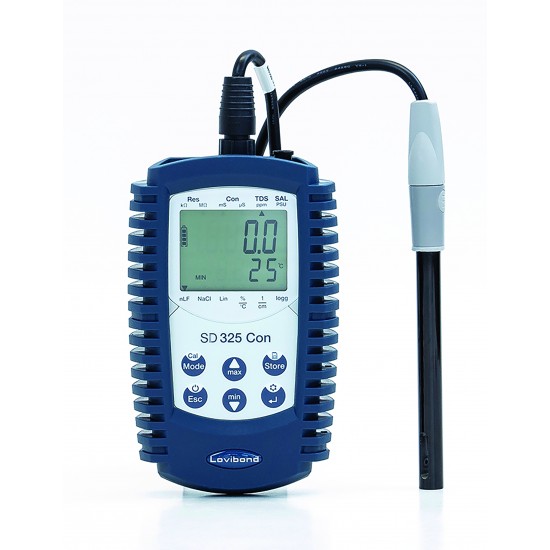
Portable Conductivity Meter SD 325 CON
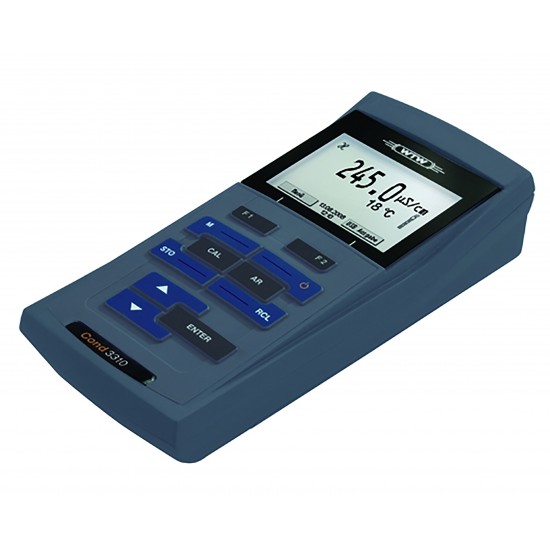
Conductivity meter set in case
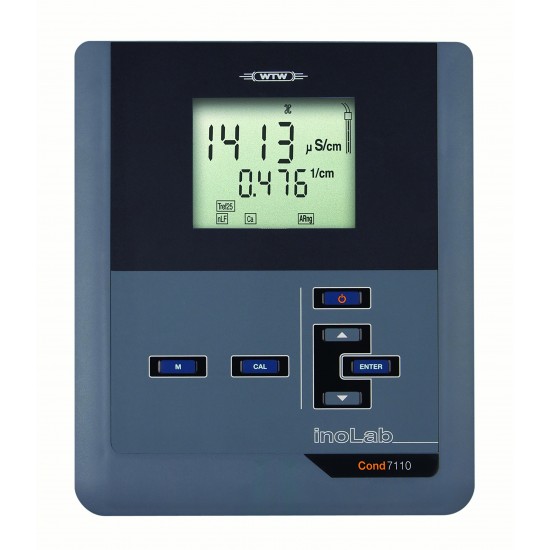
LAB 945 Laboratory Conductivity Meter