Request Information on WhatsApp

DOWNLOAD 'MEASURING INSTRUMENTS' LINE CATALOGUE FROM HERE
Download our complete...
Price
€ 1,742


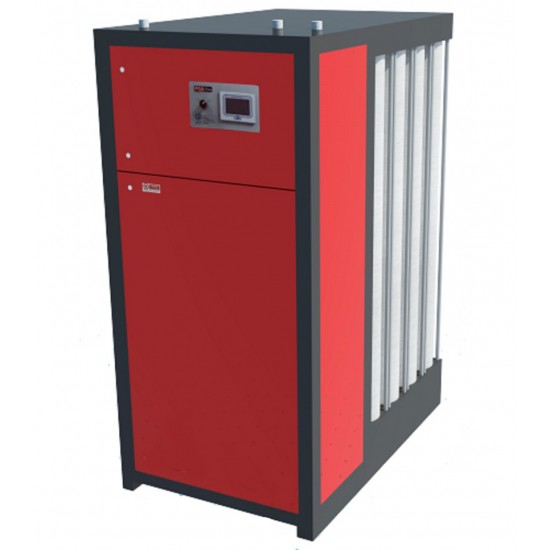
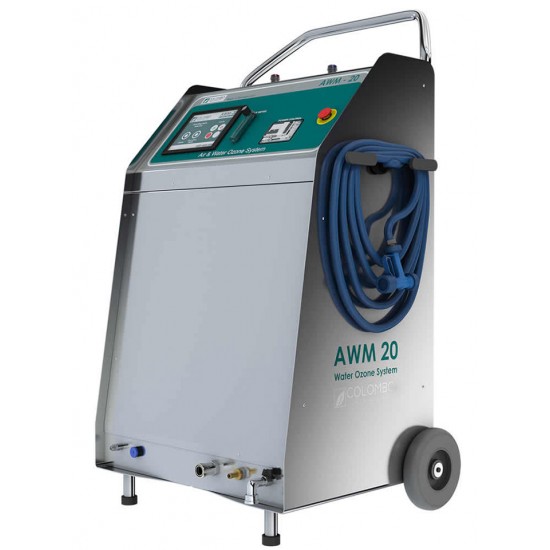


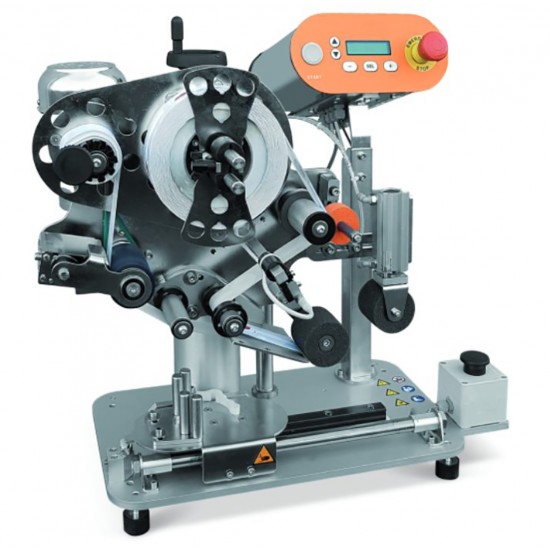
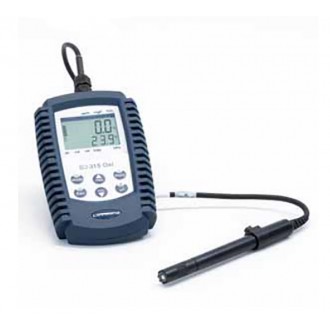
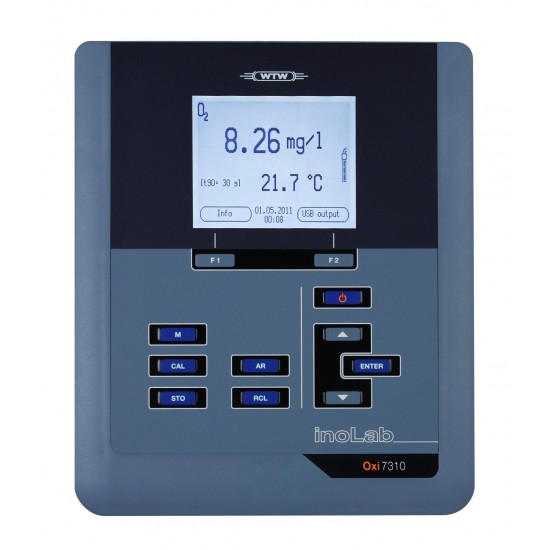
Professional dissolved oxygen meters, also known as DO meters, laboratory oxygen meters or dissolved oxygen analyzers, are measuring instruments designed to determine the concentration of oxygen dissolved in water, aqueous samples and compatible process liquids. They are used in pharmaceutical, chemical, cosmetic, biotechnology, food processing and research laboratories where reliable, reproducible and accurate oxygen measurements are required.
Developed to meet the demands of everyday laboratory work, professional dissolved oxygen measuring instruments combine robust construction, straightforward operation and dependable analytical performance. Using dedicated oxygen sensors, they allow operators to monitor oxygen concentrations, evaluate sample conditions and identify variations occurring during preparation, mixing, transfer, cooling and storage.
Dissolved oxygen meters are part of the range of professional laboratory measuring instruments and can complement other analytical and production equipment used in industrial laboratories and process control environments.
Dissolved oxygen (DO) refers to molecular oxygen present in dissolved form within a liquid. Its concentration depends on several factors, including temperature, atmospheric pressure, salinity, sample composition and aeration conditions.
Dissolved oxygen is commonly expressed in milligrams per litre (mg/L), approximately equivalent to parts per million (ppm) in dilute aqueous solutions, or as a percentage of oxygen saturation.
Monitoring dissolved oxygen provides useful information about oxygen availability, changes in liquid composition and operating conditions that may influence chemical reactions, biological activity and the stability of oxygen-sensitive substances.
In professional laboratories, dissolved oxygen analysis supports quality control, formulation development, experimental research and process monitoring.
In pharmaceutical laboratories, dissolved oxygen measurements can be used to monitor aqueous solutions, process liquids and formulations in which oxygen concentration represents a relevant analytical or technological parameter.
Oxygen monitoring can support formulation studies, comparisons between different preparation methods and investigations into conditions that may influence the stability of certain oxygen-sensitive ingredients.
Professional oxygen meters can complement equipment used for pharmaceutical and cosmetic production, research and development, providing additional analytical information during laboratory-scale and pilot-scale operations.
In cosmetic manufacturing and formulation laboratories, dissolved oxygen monitoring can be useful when working with aqueous preparations, liquid formulations and ingredients that may be sensitive to oxidation.
The measurement can help compare different mixing procedures, preparation conditions and storage methods by providing information about the oxygen present in compatible samples.
Oxygen concentration should always be interpreted alongside the chemical and physical characteristics of the formulation, since not every cosmetic product can be adequately evaluated using dissolved oxygen measurement alone.
In chemical laboratories, dissolved oxygen analyzers are used to measure oxygen concentrations in water, aqueous reagents, chemical solutions and compatible liquid samples.
Monitoring can be relevant in processes where oxygen participates in oxidation reactions, influences the stability of certain substances or represents a parameter requiring control.
Measurements performed before and after aeration, mixing or changes in temperature can provide valuable information about the behaviour of the liquid under different operating conditions.
In biotechnology applications, dissolved oxygen is an important parameter in many aerobic biological processes, where oxygen availability can influence microbial activity and cell culture behaviour.
Professional oxygen meters can support laboratory investigations involving aqueous media, experimental biological processes and studies of oxygen transfer.
For specialised biotechnology applications, the sensor technology, construction materials and measurement configuration must be compatible with the process and the laboratory's analytical requirements.
Professional dissolved oxygen meters can be used to monitor technical water, process water and compatible aqueous liquids in laboratory and industrial environments.
Oxygen concentration may change due to aeration, temperature variations, pressure changes, mixing and storage conditions.
Monitoring these changes provides additional information about process conditions and can support investigations into the behaviour of oxygen-sensitive liquids.
Dissolved oxygen alone does not provide a complete assessment of water quality and should be considered alongside other relevant physical, chemical and microbiological parameters when necessary.
Professional dissolved oxygen measuring instruments can use different sensor technologies. The most common include electrochemical sensors, such as polarographic and galvanic probes, and optical sensors based on luminescence quenching.
Electrochemical sensors generate an electrical signal through an oxygen-dependent electrochemical reaction. Depending on the sensor design, adequate sample movement may be necessary to maintain accurate readings.
Optical dissolved oxygen sensors detect changes in the luminescent properties of a sensing material exposed to oxygen. These sensors do not consume oxygen during measurement and may reduce sensitivity to sample movement.
The appropriate technology depends on the required measurement range, accuracy, sample characteristics, operating conditions and maintenance requirements.
Optical dissolved oxygen meters use a sensing element whose luminescence changes in response to oxygen concentration.
This measurement principle does not consume oxygen from the sample, making optical technology particularly useful in applications where sample movement is limited or where repeated measurements are required.
Depending on the instrument, optical sensors may offer convenient maintenance procedures and stable performance under suitable operating conditions.
Sensor compatibility, response time, calibration requirements and service intervals should always be evaluated for the intended application.
Electrochemical dissolved oxygen meters use oxygen-sensitive electrodes to generate a measurable electrical response.
Polarographic and galvanic technologies differ in their operating principles and may have different requirements for conditioning, calibration and maintenance.
Some electrochemical probes consume oxygen during measurement and therefore require sufficient liquid movement around the sensing surface.
Depending on the model, maintenance may include inspection or replacement of membranes and electrolyte.
Dissolved oxygen concentration is commonly reported in mg/L. For dilute aqueous samples, values may also be expressed approximately in ppm.
Some professional instruments display oxygen saturation as a percentage, representing the relationship between the measured oxygen concentration and the equilibrium saturation value under specified conditions.
These measurement units provide complementary information and can be useful for different analytical objectives.
The available measurement modes depend on the specific instrument configuration.
Temperature has a significant influence on oxygen solubility in water. Under comparable pressure and composition conditions, colder water generally has a higher equilibrium oxygen solubility than warmer water.
Consequently, two otherwise similar samples may contain different concentrations of dissolved oxygen when measured at different temperatures.
Temperature can also influence sensor behaviour, making appropriate correction or compensation important for reliable measurements.
Professional dissolved oxygen meters equipped with temperature measurement and compensation functions can simplify the interpretation of results.
Atmospheric pressure and salinity are additional factors affecting dissolved oxygen equilibrium concentrations.
Changes in atmospheric pressure influence oxygen availability at the gas-liquid interface, while increasing salinity generally reduces oxygen solubility in water.
Depending on the instrument, pressure and salinity correction functions may be available to improve the accuracy of oxygen concentration calculations.
Correct compensation is particularly relevant when comparing samples measured under different environmental or operating conditions.
Calibration is essential for verifying and adjusting the response of a dissolved oxygen measurement system.
Depending on the sensor technology, calibration procedures may use water-saturated air, specified reference conditions or oxygen-free reference solutions.
Before calibration, the sensor should be inspected and prepared according to the manufacturer's instructions. Temperature, atmospheric pressure and other relevant conditions must also be considered.
Calibration frequency should be determined according to measurement accuracy requirements, usage frequency, sensor technology and laboratory quality procedures.
Professional laboratory oxygen meters should provide dependable measurements, practical operation and suitable resistance to the working conditions for which they are designed.
Instrument selection should consider sample type, measurement frequency, environmental conditions and whether testing is performed at a fixed laboratory workstation or at different locations.
Ease of cleaning, sensor maintenance and the availability of replacement components are also important considerations for routine use.
Mixing and agitation can influence oxygen transfer between the surrounding atmosphere and the liquid.
The extent of oxygen transfer depends on factors such as vessel geometry, agitation intensity, liquid properties, temperature and exposure to air.
Measuring dissolved oxygen before and after mixing can help evaluate how different operating conditions affect oxygen concentration.
This information can be relevant when preparing formulations containing oxygen-sensitive ingredients or when studying oxygen transfer in process liquids.
In processes involving liquids and gases under different pressure conditions, dissolved oxygen monitoring may complement other process measurements.
Professional aphrometers, vacuum meters and sampling instruments can support specific pressure measurement and sample collection operations.
However, dissolved oxygen measurement is distinct from pressure measurement and requires an appropriate oxygen-sensitive sensor.
During liquid preparation, ingredient addition and product transfer, operating conditions may influence oxygen concentration.
Professional volumetric filling and dosing machines are designed to handle defined liquid quantities, while dissolved oxygen analysis can be performed on samples collected before or after the dosing process.
Such measurements can support the evaluation of oxygen exposure where it represents an important process variable.
Liquid temperature influences oxygen solubility and can affect the behaviour of chemical and biological processes.
Industrial liquid chillers and process cooling systems can help maintain the thermal conditions required for specific manufacturing operations.
Monitoring dissolved oxygen together with temperature provides a more complete understanding of changes occurring in aqueous samples and process liquids.
Before measurement, the oxygen sensor should be clean, properly maintained and calibrated according to the manufacturer's instructions.
Samples should be collected and handled carefully to minimise unwanted oxygen exchange with the surrounding atmosphere.
Air bubbles, uncontrolled temperature changes, contamination and excessive delays between sampling and measurement can affect the reliability of results.
The required sample movement and measurement conditions depend on the sensor technology. Readings should be recorded only after the signal has stabilised.
Dissolved oxygen can be measured in collected samples or, with suitable instruments, directly in specific process conditions.
When a sample is transferred from a production vessel to a laboratory container, exposure to air and changes in temperature may alter the original dissolved oxygen concentration.
Appropriate sampling procedures are therefore essential for obtaining representative measurements.
The selected measurement method should reflect the analytical objective and the conditions of the original process.
Sensor maintenance requirements depend on the measurement technology.
Some electrochemical probes require periodic inspection or replacement of membranes and electrolyte, while optical sensors may require maintenance or replacement of sensing caps according to manufacturer specifications.
Cleaning procedures must be compatible with sensor materials and the substances being measured.
Regular maintenance helps preserve measurement stability, reduce unexpected errors and extend instrument service life.
Selecting the correct dissolved oxygen meter starts with understanding the sample and the intended application.
Important parameters include liquid composition, expected oxygen concentration, operating temperature, salinity, pressure and chemical compatibility with the sensor materials.
Measurement accuracy, resolution, response time, calibration requirements and sensor technology should also be evaluated.
It is important to determine whether the instrument will be used for benchtop measurements, portable laboratory testing or process monitoring.
For specialised applications, the suitability of the entire measuring system should be verified under the actual operating conditions.
Ariacqua offers professional laboratory measuring instruments and equipment for pharmaceutical, chemical, cosmetic, biotechnology, food processing and research applications.
The possibility of combining analytical instruments with preparation, dosing, pressure monitoring and cooling equipment supports coordinated solutions for different laboratory and industrial requirements.
Choosing the appropriate dissolved oxygen meter requires careful consideration of the sample characteristics, operating conditions and analytical objectives to ensure reliable results during everyday laboratory work.
A professional dissolved oxygen meter measures the concentration of molecular oxygen dissolved in a liquid, generally water or an aqueous solution. This parameter is known as DO, or Dissolved Oxygen, and is commonly expressed in milligrams per litre (mg/L), approximately in parts per million (ppm) for dilute aqueous solutions, or as a percentage of oxygen saturation.
Dissolved oxygen measurement is important because oxygen availability can influence chemical reactions, biological activity and the stability of certain oxygen-sensitive substances. In pharmaceutical and cosmetic laboratories, it can support formulation studies, process investigations and comparisons between different preparation or storage conditions. In chemical laboratories, it may be used to monitor solutions where oxygen participates in reactions or represents an important process variable.
Biotechnology laboratories frequently monitor dissolved oxygen in aerobic biological systems, where oxygen availability can affect microbial or cell culture activity. The measurement is also useful for process water, research activities and selected food production applications.
Reliable measurements require a sensor suitable for the sample, appropriate calibration and careful control of temperature and sampling conditions. Dissolved oxygen should be considered one analytical parameter within a broader quality control strategy.
Optical and electrochemical dissolved oxygen sensors use different principles to determine oxygen concentration in a liquid.
Electrochemical sensors, including polarographic and galvanic probes, measure an electrical signal generated by an oxygen-dependent electrochemical reaction. Some electrochemical sensors require polarisation before use. Because they consume oxygen during measurement, adequate sample movement may be necessary to prevent local oxygen depletion near the sensing surface. Maintenance can involve membrane and electrolyte replacement, depending on the design.
Optical sensors use a luminescent material whose emission characteristics change in the presence of oxygen. This method does not consume oxygen during measurement and can be advantageous when sample movement is limited.
Neither technology is universally superior. The most appropriate choice depends on the expected oxygen concentration, measurement accuracy, response time, sample composition, maintenance requirements and operating conditions.
For professional laboratories, sensor selection should consider the complete measuring system rather than focusing exclusively on the sensing principle.
Temperature affects both the equilibrium solubility of oxygen in water and, depending on the technology, the response of the measuring sensor.
Under comparable pressure and composition conditions, colder water generally has a higher equilibrium oxygen solubility than warmer water. Consequently, two similar samples maintained at different temperatures may contain different dissolved oxygen concentrations even when no other significant chemical changes have occurred.
Professional dissolved oxygen meters may incorporate temperature sensors and compensation functions to improve measurement accuracy and calculate oxygen concentration or saturation correctly.
However, temperature compensation does not mean that the actual dissolved oxygen content of a sample remains unchanged when its temperature changes. Oxygen transfer between the liquid and surrounding gas, mixing conditions and the time available to reach equilibrium must also be considered.
For reliable comparisons between laboratory samples or production batches, temperature should be measured, recorded and taken into account when interpreting the results.
Calibration procedures depend on the sensor technology and the manufacturer's instructions.
Many dissolved oxygen meters use calibration in water-saturated air or another specified reference environment. Some instruments also support zero-oxygen calibration or verification using an appropriate oxygen-free reference solution.
Before calibration, the sensor should be inspected for contamination, damage and signs of wear. Electrochemical probes may require checks of the membrane and electrolyte, while optical sensors may require inspection of the sensing cap.
Temperature and atmospheric pressure should be considered because they influence the reference conditions used during calibration. Salinity may also be relevant for subsequent measurements in particular samples.
Calibration frequency depends on instrument use, required accuracy, sensor condition and laboratory quality procedures.
It is important to distinguish calibration from verification. Calibration may involve adjusting the instrument response, while verification determines whether the instrument performs acceptably against a reference without necessarily changing its settings.
Yes, provided that the formulation is compatible with the sensor technology and construction materials.
In pharmaceutical and cosmetic laboratories, dissolved oxygen analysis may be useful for aqueous preparations, liquid formulations and products containing ingredients sensitive to oxidation.
The measurement can support comparisons between preparation methods, mixing conditions, aeration procedures and storage environments. It can also help identify changes in oxygen concentration during experimental development.
However, not every formulation is suitable for direct dissolved oxygen measurement. High viscosity, emulsions, solvents, aggressive substances and other matrix characteristics may affect sensor compatibility or measurement reliability.
It is also important to distinguish dissolved oxygen within the liquid from oxygen present in the headspace of a container. These are different analytical parameters and may require different instruments.
For specialised pharmaceutical applications, the measuring method should be evaluated and qualified or validated as required by the laboratory's quality procedures.
Correct sampling is essential because dissolved oxygen concentration can change rapidly when a liquid is exposed to different environmental conditions.
When a sample is collected from a production vessel or process line, contact with air may increase or decrease its dissolved oxygen concentration, depending on its initial condition.
Turbulence, air bubbles, temperature changes and delays before measurement can also affect the result.
To minimise these effects, samples should be collected using suitable procedures, avoiding unnecessary agitation and excessive exposure to the surrounding atmosphere.
The required measurement conditions depend on sensor technology. Some electrochemical sensors need adequate sample movement, while optical sensors may have different requirements.
The sensor should be clean, correctly calibrated and allowed to stabilise before the reading is recorded.
Standardised sampling procedures improve reproducibility and make comparisons between different samples, experiments and production batches more meaningful.
Dissolved oxygen refers to oxygen molecules present within a liquid, while atmospheric oxygen is part of the gaseous mixture that forms the surrounding air.
The two are connected through gas exchange at the interface between air and liquid, but they represent different quantities and require different measurement approaches.
A dissolved oxygen meter measures oxygen within the liquid, whereas a gas oxygen analyzer measures oxygen concentration or partial pressure in a gaseous environment.
This distinction is particularly important for closed vessels, controlled-atmosphere processes, storage tanks and systems involving inert gases.
The oxygen concentration in a container's headspace does not automatically correspond to the dissolved oxygen concentration in the product. The relationship depends on pressure, temperature, gas composition, liquid characteristics and equilibrium conditions.
In some applications, both dissolved oxygen and headspace oxygen must be measured to obtain a complete understanding of the system.
The selection process should begin with the intended application and the physical and chemical characteristics of the sample.
Important information includes the liquid type, expected oxygen concentration, operating temperature, salinity, pressure and any substances that could affect sensor compatibility.
The required measurement accuracy, resolution, response time and sensor technology should then be evaluated. Calibration procedures, maintenance requirements and the availability of replacement components are also relevant.
Laboratories should determine whether measurements will be performed at a fixed workstation, at multiple sampling locations or directly within a production process.
For pharmaceutical, cosmetic and chemical applications, additional requirements for data documentation, traceability and method validation may apply.
The most suitable instrument is not necessarily the one with the highest nominal specifications, but the system capable of delivering reliable and reproducible results under the actual operating conditions.
We supply high-quality professional equipment and customized solutions designed to meet the specific needs of every customer. Our experienced team provides expert support in selecting the most suitable products, offering reliable solutions, technical assistance and tailor-made configurations for companies, laboratories, industrial applications and professional environments.
Contact us for product information, personalized advice and professional support in choosing the ideal equipment for your business requirements.
Portable OXIMETER Set in case with sensor