Request Information on WhatsApp
DOWNLOAD 'MEASURING INSTRUMENTS' LINE CATALOGUE FROM HERE
Download our complete...
Price
€ 1,028





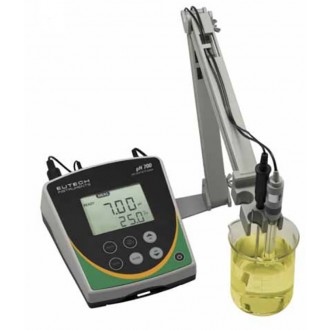
Professional pH meters are measuring instruments designed for fast, accurate and repeatable pH control in pharmaceutical, galenic, cosmetic, chemical, biotechnology, nutraceutical, food and research laboratories. Thanks to intuitive operating systems, automatic functions and multifunction displays, they help reduce operator error and provide reliable readings during raw material checks, formulation development, intermediate-process control and final product testing.
Professional models can include automatic calibration, AutoRead functions and simultaneous display of pH, mV and temperature, making routine analysis easier and more consistent. Function keys can be designed for convenient operation even while wearing laboratory gloves, which is particularly useful in environments where operators must follow specific hygiene and safety procedures.
pH meters are part of the range of professional laboratory measuring instruments and can be integrated into quality-control, formulation, preparation and production workflows.
A pH meter determines the acidity or alkalinity of a sample through an electrochemical measurement. pH is one of the most important control parameters in many laboratory and production processes because it can influence formulation behaviour, ingredient compatibility, process repeatability and final product characteristics.
In pharmaceutical and galenic production, pH can be relevant to the stability and performance of solutions, gels and other preparations. In cosmetics, it is commonly monitored in creams, shampoos, detergents, lotions, emulsions and other water-based formulations. In chemical applications, it is used to monitor solutions, reagents and process stages.
A professional meter provides a precise numerical result and supports a more controlled and reproducible measurement procedure than simple indicator methods.
In pharmaceutical laboratories, pH can be monitored on raw materials, preparation solutions, intermediate products and finished formulations. Measurement helps confirm whether a batch falls within the parameters defined by the production method or internal quality procedures.
Automatic calibration simplifies routine operation, while stability-recognition functions help the operator determine when the displayed result has sufficiently stabilised.
Professional pH meters can be used within environments dedicated to pharmaceutical, cosmetic and R&D production, integrating analytical control into preparation and manufacturing processes.
In galenic preparations, pH control can be particularly important for creams, gels, solutions, suspensions and liquid preparations. Measurements may be performed during formulation or at the end of the preparation process according to the laboratory's internal procedures.
A professional pH meter provides a precise numerical value that can be used to monitor changes resulting from formulation adjustments, temperature variations or the addition of acidity or alkalinity regulators.
Simple operation and guided calibration functions make these instruments suitable for frequent measurements across different production batches.
In cosmetic production, pH is commonly measured in creams, gels, cleansers, shampoos, conditioners, toners, lotions and emulsions. The value can influence product characteristics and the behaviour of different ingredients within the formulation.
A pH meter can be used both in research and development and during production to compare samples and verify batch-to-batch repeatability.
For highly viscous products, choosing the correct electrode is particularly important because probe shape and junction design can strongly influence ease of use and measurement quality.
In chemical laboratories, pH meters are used to analyse solutions, reagents, blends and products at different stages of the process. Measurement provides a rapid indication of acidity or alkalinity and can be used to monitor the effect of corrective additions.
For aggressive substances or unusual samples, the electrode must be compatible with the chemistry and measurement conditions.
Temperature, chemical composition, conductivity and the presence of solvents can all influence electrode behaviour and should be taken into account when choosing the instrument and probe.
Automatic calibration simplifies one of the most important operations required to maintain reliable pH measurement. The meter can recognise compatible buffer solutions and guide the operator through the calibration procedure.
Regular calibration compensates for gradual changes in electrode response and helps maintain measurement quality over time. Calibration frequency depends on usage, sample type, required accuracy and laboratory procedures.
For critical applications, the instrument should also be checked periodically using correctly stored and suitable reference buffer solutions.
The AutoRead function helps the operator identify when the measured value has reached a sufficiently stable condition. This reduces the risk of recording a result too early while the electrode response is still changing.
This is particularly useful when many samples are analysed or when several operators use the same instrument and a more standardised measurement procedure is required.
Reading stability also depends on the electrode, temperature, sample preparation and correct maintenance of the probe.
A multifunction display can show pH and, on compatible models, mV and sample temperature in a clear and easily readable format.
Temperature is important because it affects electrode response and can also influence the actual chemical equilibrium of the sample. Displaying several parameters on the same instrument makes routine checking faster and more intuitive.
The mV mode may also be useful for selected electrochemical measurements, electrode checks or specific laboratory procedures.
In pharmaceutical, chemical and cosmetic laboratories, operators frequently work while wearing gloves. For this reason, control-panel ergonomics is an important practical consideration.
Clearly positioned function keys that can be operated with gloves help the user control the instrument without interrupting the laboratory procedure or removing protective equipment.
This improves usability during routine measurements and supports smoother integration into daily laboratory workflows.
Temperature can influence both the electrochemical response of the electrode and the chemical equilibrium of the sample. For this reason, many professional pH meters can be used with a temperature probe or automatic temperature-compensation functions.
When comparing measurements made at different times, it is useful to record or control the sample temperature. The same formulation measured at very different temperatures may not produce directly comparable results unless this parameter is taken into account.
For reproducible laboratory results, measurement temperature should therefore be included in the standard operating procedure whenever relevant.
The quality of the measurement depends not only on the meter but also on the electrode. A free-flowing aqueous solution may require a different probe design from a cream, gel, suspension or semi-solid formulation.
Electrode shape, membrane type, reference system and junction design should be selected according to the physical and chemical characteristics of the sample.
Correctly matching the meter and electrode can improve response time, stability, ease of cleaning and overall measurement repeatability.
Creams and gels require more attention than simple aqueous solutions. Their viscosity may slow stabilisation and can make it more difficult for the electrode to make consistent contact with the sample.
An appropriate electrode and a repeatable testing procedure are therefore important. The sample should be sufficiently homogeneous and the probe should be positioned consistently.
After measurement, the electrode should be cleaned according to the nature of the formulation to prevent residues from affecting subsequent readings.
During formulation development or production, pH may need to be checked after the addition of specific ingredients or pH-adjusting components.
The sample must be representative of the complete batch. Professional industrial and laboratory mixers and agitators can help obtain a more homogeneous distribution of ingredients before the measurement is taken.
The formulation should be allowed sufficient time to homogenise and the meter reading should be allowed to stabilise before the final result is recorded.
In production processes, pH can be measured on samples collected during transfers between tanks, mixers and other process equipment.
Industrial pumping, transfer and dosing systems move the formulation between different process stages, while analytical control can be used to verify that the product remains within the required pH range.
Sampling points should be selected carefully so that the collected sample is genuinely representative of the production batch.
pH can be checked at different stages of a process, including before and after filtration when required by the production or quality-control procedure.
Lines fitted with AISI 316 stainless steel pressure filters can include suitable sampling points for checking the product at different stages of treatment.
A pH meter does not measure filtration efficiency, but it can help confirm whether the chemical pH parameter remains consistent before and after the filtration stage.
pH measurement is frequently included in quality-control procedures because it provides a numerical value that can be compared across raw materials, intermediate products and finished batches.
To make results truly comparable, it is important to standardise the measurement method. Sample temperature, electrode type, calibration procedure, stabilisation time and cleaning method should be kept as consistent as possible.
Recording the pH value together with the measurement conditions makes the result more useful for production monitoring and batch comparison.
Before measurement, the meter should be correctly calibrated and the electrode should be clean and properly conditioned according to its specifications. The sample should be representative and adequately homogenised.
The electrode is then immersed or positioned in the sample, avoiding conditions that could interfere with the reading. The operator should wait for the value to stabilise or use the AutoRead function when available.
After measurement, the electrode should be rinsed and stored correctly to preserve its performance.
Buffer solutions are reference liquids with a known pH and are used to calibrate the instrument. They should be stored correctly and protected from contamination during use.
The calibration points should be appropriate for the pH range in which measurements are normally performed. A laboratory mainly testing near-neutral products may use a different calibration range from one working predominantly with acidic or alkaline samples.
Automatic calibration functions help guide the operator through this process and reduce procedural variability.
Correct electrode cleaning is essential for maintaining response time and stability. Residues from creams, oils, proteins, detergents and other products can accumulate on the glass membrane or junction.
The cleaning procedure should be selected according to the contaminant and the electrode manufacturer's recommendations. Not every cleaning solution is suitable for every probe.
After cleaning, the electrode should be rinsed and returned to the correct storage conditions.
pH electrodes should be stored according to the specifications of the selected probe, generally under conditions that keep the sensitive membrane hydrated using an appropriate storage solution.
Incorrect storage can slow response and reduce performance. The electrode should therefore not be allowed to dry for extended periods unless this is specifically permitted by the probe technology.
Correct maintenance, cleaning and storage are just as important as the quality of the meter itself.
Selection should begin with the type of samples that will be measured. It is important to determine whether the laboratory will mainly analyse aqueous solutions, creams, gels, suspensions, semi-solid products or unusual chemical formulations.
The required measuring range and resolution, the need for mV and temperature measurement, temperature-compensation functions and electrode type should then be considered.
For laboratories performing frequent daily measurements, functions such as automatic calibration, stability recognition, a clear display and glove-friendly controls can provide important practical advantages.
A professional pH meter should undergo regular checks to maintain reliable performance. Calibration frequency should be defined according to the laboratory procedure and the intensity of use.
The electrode should be monitored for slow response, unstable readings, poor calibration performance or inconsistent results. Buffer-solution condition can also directly influence the quality of calibration.
In laboratories with structured quality procedures, keeping records of calibration and verification can support consistency and traceability of the measurement process.
Ariacqua offers professional pH measuring instruments and laboratory solutions for pharmaceutical, galenic, cosmetic, chemical, biotechnology, nutraceutical, food and research applications.
The possibility of integrating measuring instruments with preparation, mixing, pumping and filtration equipment makes it possible to create complete workflows that combine product preparation with analytical control during the different stages of production.
The difference is not limited to price or the stated accuracy on the specification sheet. A professional pH meter is designed to provide better reading stability, controlled calibration procedures, compatibility with different electrodes and functions that help make results more repeatable. In pharmaceutical, cosmetic and chemical laboratories, obtaining a number on a display is not enough: the measurement should also be performed under controlled conditions and repeated consistently over time. Automatic calibration, AutoRead, temperature measurement and the ability to select an electrode suited to the sample make the system more appropriate for professional work. Electrode quality and maintenance are equally important. Even an advanced instrument can provide unreliable results if the probe is dirty, incorrectly stored, poorly calibrated or unsuitable for the sample.
A pH electrode gradually changes its response because of normal use, ageing, storage conditions and exposure to different samples. Calibration compares the instrument response with buffer solutions of known pH and allows the system to compensate for changes that develop over time. The most appropriate calibration frequency depends on the number of measurements, required accuracy, sample characteristics and the laboratory's internal procedures. A professional laboratory performing frequent analyses may calibrate much more often than a user performing occasional checks. Buffer solutions must also be correctly stored and protected against contamination because poor reference solutions can compromise the calibration. Automatic calibration simplifies the procedure, but it does not replace good laboratory practice.
AutoRead helps the operator determine when the pH value has reached a sufficiently stable condition. When the electrode is first placed in a sample, the displayed value may change while the probe reaches equilibrium with the product. Recording the result too soon can create unnecessary differences between repeated measurements. AutoRead monitors signal stability and helps standardise the point at which the result is accepted. This can be especially useful when many samples are tested or several operators use the same instrument. Stability still depends on the sample, electrode condition, temperature and maintenance, so AutoRead should be considered an aid to a controlled measurement procedure rather than a substitute for correct laboratory technique.
Yes, but creams, gels and semi-solid products require a suitable measurement configuration. An electrode designed only for free-flowing aqueous solutions may be inconvenient or slow when used with a viscous formulation. Probe geometry, junction design and the ability to establish good contact with the sample can all influence measurement speed and stability. Sample homogeneity is also important because a non-uniform formulation may give different readings in different areas. After testing, creams and gels can leave residues on the glass membrane and junction, so careful cleaning is essential. For this reason, choosing the correct pH meter should also include selecting an electrode specifically suited to the type of product being analysed.
Yes. Temperature affects both the electrochemical response of the electrode and the actual chemical behaviour of the sample. Professional pH meters may therefore operate with temperature sensors and automatic temperature compensation. It is important to understand that compensating the electrode response does not necessarily make the chemical pH of a product identical at different temperatures. When comparing batches or samples, it is therefore useful to define consistent measurement conditions. Displaying both pH and temperature allows the operator to record the circumstances of the analysis more accurately and makes results easier to compare over time.
The service life of a pH electrode depends on sample type, measurement frequency, temperature, cleaning methods and storage conditions. Signs of deterioration may include progressively slower response, unstable readings, difficulty during calibration or poor repeatability. Before replacing the probe, it is useful to check whether it is simply contaminated or has been stored incorrectly, since an appropriate cleaning or conditioning procedure may sometimes restore acceptable performance. Laboratories requiring high measurement reliability can monitor electrode behaviour during calibration over time. Changes in slope, response speed or calibration stability can help identify gradual deterioration before the probe becomes unsuitable for routine use.
Electrode selection depends on the physical and chemical nature of the sample. Aqueous solutions, high-viscosity products, creams, gels, suspensions and low-water-content samples may require different probe configurations. Important factors include electrode geometry, membrane design, reference system, junction type and material compatibility. For more difficult samples, temperature, viscosity and chemical composition should also be specified. The electrode is a fundamental part of the measuring system and should not be considered a universal accessory. Correctly matching the meter and probe can improve response speed, stability, cleaning practicality and electrode service life.
To select the most appropriate instrument, it is useful to know which products will be analysed, their approximate pH range, consistency and normal measurement temperature. It should be specified whether the samples are aqueous solutions, creams, gels, suspensions, pharmaceutical preparations, cosmetic formulations or unusual chemical samples. The required accuracy, number of daily analyses and the need to measure mV and temperature should also be defined. For frequent laboratory use, automatic calibration, AutoRead, clear displays and controls that can be operated while wearing gloves can be particularly useful. Final selection should consider the complete measuring system: meter, electrode, calibration buffers, cleaning method and laboratory operating procedures.
We supply high-quality professional equipment and customized solutions designed to meet the specific needs of every customer. Our experienced team provides expert support in selecting the most suitable products, offering reliable solutions, technical assistance and tailor-made configurations for companies, laboratories, industrial applications and professional environments.
Contact us for product information, personalized advice and professional support in choosing the ideal equipment for your business requirements.
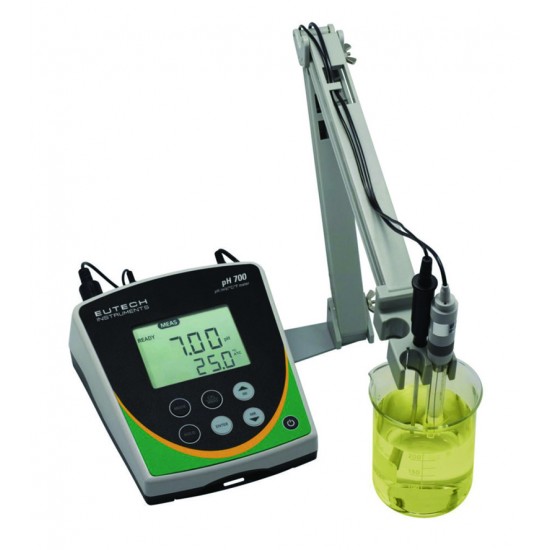
PH meter Eutech™ PH2700 series
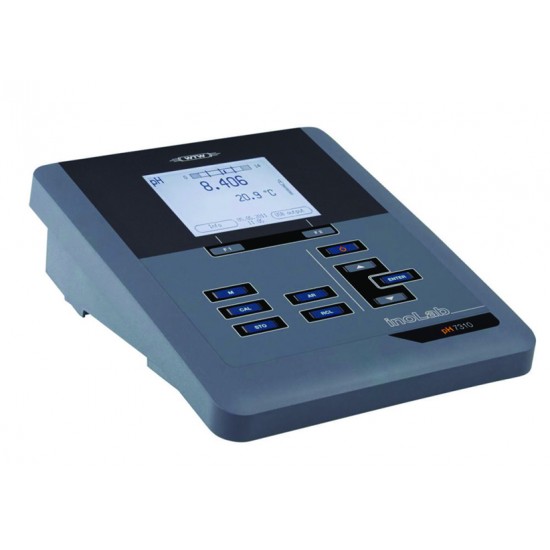
Laboratory instrument for pH measurement
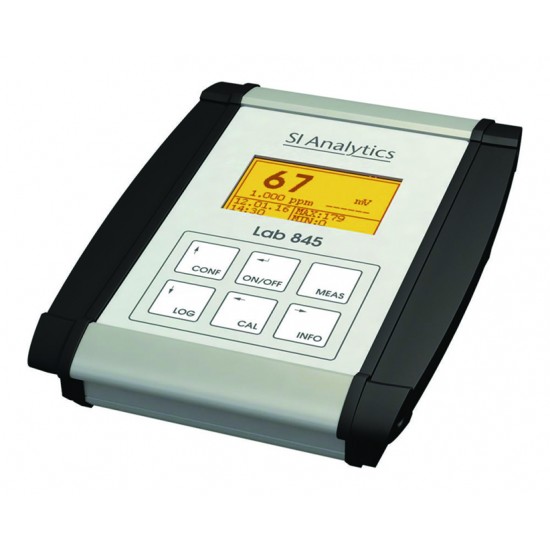
Laboratory instrument for pH measurement with integrated printer
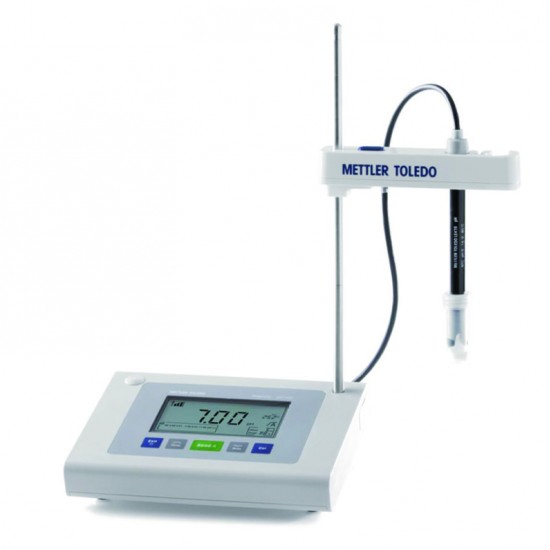
Mettler Toledo SD20 benchtop pH meter