

 Request Information on WhatsApp

DOWNLOAD 'MEASURING INSTRUMENTS' LINE CATALOGUE FROM HERE
Download our complete...
Price
€ 6,405




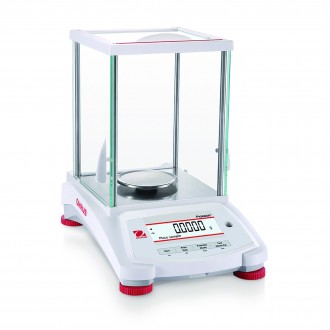
Professional laboratory balances are electronic weighing instruments designed to deliver high precision, repeatability, reliability and ease of use in laboratories, industrial facilities, research centres and educational environments. These affordable, high-performance weighing solutions are ideal for professionals requiring consistent measurements, reproducible weighing procedures and multiple operating functions within a single instrument.
Depending on the model, professional balances support basic weighing, parts counting, percentage weighing, dynamic weighing and density determination. These functions make laboratory weighing scales versatile instruments for raw material inspection, sample preparation, product formulation, quantitative analysis and industrial quality control.
Professional balances complement the range of professional laboratory measuring instruments, helping laboratories and manufacturers organise reliable measurement and quality assurance procedures.
A professional electronic balance determines the mass of a sample through a measurement system designed to provide stable and repeatable readings under the operating conditions specified by the manufacturer.
In pharmaceutical, chemical, cosmetic and food laboratories, weighing is essential for preparing solutions, measuring ingredients, comparing samples and verifying quantities during formulation and production.
In industrial environments, professional balances are used to check the mass of components, materials, packages and small production batches. In educational laboratories, they support practical exercises and the development of accurate measurement techniques.
Selecting the correct balance requires consideration of maximum capacity, readability, repeatability and environmental conditions.
Precision balances are designed for applications requiring the detection of relatively small mass differences. Technical laboratory balances offer versatile weighing solutions for routine laboratory and industrial operations where an appropriate combination of capacity, readability and practicality is required.
Commercial product classifications do not always correspond to a single universal level of accuracy. When comparing instruments, users should examine maximum capacity, readability, repeatability, linearity and the operating conditions stated in the technical specifications.
Applications involving particularly small sample masses or more demanding metrological requirements may require analytical balances or other instruments with suitable performance characteristics.
Cost-effective professional balances allow laboratories and industrial operators to perform a wide range of weighing operations without necessarily investing in instruments intended for highly specialised analytical applications.
An affordable laboratory balance should not be assessed solely by its purchase price. Measurement stability, repeatability, available functions, ease of cleaning and suitability for the intended working environment are equally important.
The most appropriate instrument is one that delivers performance consistent with the actual tolerances and requirements of the application.
Basic weighing is the primary function of electronic balances and allows operators to determine the mass of solid substances, containers, ingredients and other samples within the instrument's specified capacity.
Laboratories use this function to prepare reagents, verify quantities, develop formulations and record sample masses during experimental procedures.
Where available, the tare function allows the weight of a container to be excluded from the displayed measurement, making it possible to determine the net mass of the material.
Reliable results require stable installation, appropriate environmental conditions and correct handling of samples and containers.
The parts counting function estimates the number of individual components in a batch by calculating their average unit mass.
This function is useful for counting screws, fasteners, small mechanical components, plastic parts and other items with sufficiently uniform individual weights.
The procedure normally begins by weighing a reference sample containing a known number of pieces. The balance calculates the average mass of each component and uses this value to estimate the total quantity.
Counting accuracy depends on the uniformity of the components, their individual mass and the readability of the balance. Very lightweight items or components with significant mass variations may require more sensitive instruments or alternative counting methods.
Percentage weighing allows the mass of a sample to be displayed as a percentage of a previously established reference mass.
This function can be useful when comparing quantities, preparing mixtures and checking proportions during laboratory or production activities.
In pharmaceutical, cosmetic and chemical laboratories, percentage weighing may support selected formulation and quality control procedures.
Reliable interpretation requires an accurately defined reference mass and a balance with sufficient measurement performance.
Dynamic weighing, available on selected models, is designed to obtain a representative result when the load produces fluctuating readings.
Depending on the instrument, this function may use a measurement acquisition procedure or an averaging algorithm over a defined period.
It can be useful for samples that generate minor movement or temporary signal fluctuations.
Dynamic weighing on a laboratory balance should not be confused with industrial checkweighing or continuous weighing on moving conveyor systems, which generally require dedicated equipment.
Some professional balances support density determination through appropriate procedures and accessories.
Density describes the relationship between the mass of a material and the volume it occupies. Depending on the sample, density may be determined through direct mass and volume measurements or methods based on Archimedes' principle.
The correct procedure depends on the characteristics of the material, the balance configuration and the availability of suitable accessories.
Temperature, trapped air bubbles, sample porosity and material compatibility can influence the accuracy of density measurements.
Accurate raw material weighing is an important stage in the preparation and processing of pharmaceutical powders.
During pharmaceutical powder processing and production, professional balances may be used to measure ingredients, prepare samples and verify material quantities before or after specific processing operations.
Instrument selection should take into account the minimum sample mass, required accuracy, material characteristics and any relevant powder containment requirements.
Applications subject to specific regulatory or quality requirements may require qualified equipment, documented procedures and appropriate metrological controls.
In chemical laboratories, professional balances are used to weigh solid reagents, prepare solutions, produce mixtures and verify quantities of chemical substances.
Accurate mass determination contributes to the reproducibility of laboratory preparations and the reliability of comparisons between experimental results.
The balance should be selected according to sample mass, required readability and compatibility with the substances being handled.
Corrosive, hygroscopic or potentially hazardous materials may require additional handling precautions, protective arrangements or specialised weighing procedures.
In cosmetic research and manufacturing, professional balances are used to determine ingredient quantities for creams, gels, emulsions and other liquid or solid formulations.
Accurate weighing contributes to reproducible experimental recipes and supports comparisons between formulations developed under different conditions.
Where supported, tare and percentage weighing functions can simplify mixture preparation and proportion checks.
The most suitable balance depends on ingredient quantities, required measurement accuracy and the operating environment.
In food laboratories, electronic balances can be used to weigh ingredients, prepare samples, verify quantities and support quality control activities.
Applications include research and development, product formulation, mixture preparation and the checking of raw material quantities.
Instruments should be suitable for the intended working environment, and appropriate cleaning procedures should be followed when handling food-related materials.
Laboratory balances are fundamental instruments for practical exercises in chemistry, physics, biology and applied sciences.
They allow students to learn the principles of mass measurement, taring, repeatability, accuracy and measurement uncertainty.
Where available, functions such as percentage weighing, parts counting and density determination can extend the range of educational experiments.
For teaching environments, ease of use, robust construction and straightforward operation are particularly important.
Maximum capacity indicates the highest load permitted under the conditions specified by the manufacturer.
Readability, also called the display division, is the smallest mass increment shown by the balance.
Repeatability describes the ability of the instrument to provide similar results when the same load is weighed repeatedly under defined conditions.
Linearity describes the relationship between indicated values and reference masses across the weighing range.
A very small display increment does not automatically guarantee equivalent measurement accuracy. All relevant metrological specifications must be considered together.
In professional metrology, precision and accuracy have different meanings.
Precision concerns the closeness of repeated measurement results, while accuracy refers to how close a measurement is to the reference value.
Measurement uncertainty characterises the dispersion of values that can reasonably be attributed to the measured quantity.
For professional applications, the overall performance of the balance must be suitable for the tolerances established by the weighing procedure.
Professional balances should undergo appropriate checks in accordance with manufacturer recommendations and internal quality procedures.
Calibration establishes the relationship between instrument indications and reference mass values using suitable measurement standards.
Adjustment, when supported, modifies the response or settings of the instrument.
Routine performance checks using appropriate reference weights help identify deviations from established acceptance criteria.
The frequency of these procedures depends on usage, environmental conditions and the quality requirements of the application.
For accurate weighing, the balance should be installed on a stable surface and correctly levelled where required by the instrument design.
Vibrations, air currents, temperature fluctuations and other environmental disturbances should be minimised.
Samples should be positioned correctly on the weighing pan, without exceeding maximum capacity and using suitable containers.
Operators should wait for the reading to stabilise and follow the manufacturer's instructions for cleaning, checking and maintaining the instrument.
Professional weighing instruments can be incorporated into workflows involving raw material inspection, batch preparation and quantitative verification.
In facilities using industrial pumps for liquid transfer and dosing, weighing containers or collected samples may provide additional information about transferred material quantities when an appropriate measurement method is used.
Mass measurements must nevertheless be distinguished from volume and flow measurements, which require their own procedures and instrumentation.
Gravimetric weighing determines the mass of a material, whereas volumetric dosing measures or delivers a specified volume of liquid.
Professional volumetric filling machines and dosing equipment are designed for applications requiring controlled liquid volumes.
A laboratory balance may support gravimetric verification of dispensed quantities, provided that liquid density, temperature and measurement uncertainty are appropriately considered.
This approach can be useful for quality control and selected filling process verification activities.
In laboratories and industrial facilities, mass measurements may complement other physical measurements, including pressure and vacuum.
Professional aphrometers, vacuum meters and pressure measuring instruments address different measurement requirements but may form part of broader laboratory and production monitoring activities.
Each instrument should be selected according to the physical parameter that needs to be measured.
Professional balances may be used to check the net or gross weight of products before or after packaging operations.
In production facilities equipped with industrial labelling machines, weight verification can be performed as a separate stage of product preparation and packaging control.
When weighing results are used for commercial or legally regulated purposes, the applicable legal metrology requirements must be considered.
Proper maintenance contributes to consistent performance and the service life of laboratory balances.
The weighing pan and accessible surfaces should be cleaned using procedures and products compatible with the instrument materials.
Overloading, impacts, liquid ingress and environmental conditions outside the manufacturer's specifications should be avoided.
Periodic checks using suitable reference masses help identify changes in measurement performance.
Choosing a laboratory balance begins with identifying the minimum and maximum sample masses and the accuracy required by the application.
Important specifications include weighing capacity, readability, repeatability, linearity, weighing pan dimensions and reading stability.
Users should also verify the availability of the functions they need, including parts counting, percentage weighing, dynamic weighing and density determination.
Environmental conditions, frequency of use, calibration procedures and any applicable metrological requirements should also be considered.
Ariacqua offers professional measurement instruments and equipment for laboratories, industrial operations, educational institutions and specialised production environments.
The availability of solutions for weighing, measurement, dosing and process monitoring helps professionals select instruments suited to different operational requirements.
The most appropriate laboratory balance combines suitable metrological performance, useful operating functions, practical handling and cost-effectiveness for the intended application.
Precision balances, technical balances and analytical balances all measure mass, but they are intended for different weighing requirements.
Technical balances are commonly used for routine laboratory operations, industrial activities and educational exercises. They generally provide a practical combination of weighing capacity, readability and affordability.
Precision balances are selected for applications requiring relatively small mass differences to be measured with appropriate metrological performance. However, the commercial terms "technical balance" and "precision balance" may overlap, so users should compare actual instrument specifications rather than relying solely on product names.
Analytical balances are designed for applications requiring higher readability and tighter control of weighing conditions. They commonly feature a draft shield to reduce disturbances caused by air movement.
The correct choice depends on sample mass, required tolerance, environmental conditions and acceptable measurement uncertainty.
A balance displaying more decimal places is not automatically more accurate in every situation. Repeatability, linearity, calibration status and installation conditions must also be evaluated.
Selecting the right professional balance requires understanding the range of sample masses and the measurement performance required by the procedure.
Maximum capacity must be sufficient to accommodate both the sample and any containers without exceeding the instrument's specified load limit.
Readability indicates the smallest increment displayed by the balance. However, this value should not be confused with actual measurement accuracy.
Repeatability describes the variation between repeated measurements of the same load, while linearity concerns measurement behaviour across the weighing range.
When weighing very small quantities, the minimum usable sample mass should be evaluated according to the instrument's repeatability and the acceptable relative error.
Environmental conditions also matter. Vibrations, air currents, temperature changes and unstable surfaces may affect weighing results.
The best balance is therefore one that meets the complete measurement requirements of the procedure, rather than simply offering the smallest display increment.
The parts counting function estimates the number of individual components in a batch using their average unit mass.
The operator typically begins by placing a known number of items on the balance. The instrument calculates the average mass of one component and then uses that reference value to estimate the quantity in a larger batch.
This function is useful for screws, fasteners, plastic components, small mechanical parts and other items with sufficiently consistent individual masses.
Counting accuracy depends on several factors. If components vary significantly in mass, the estimated quantity may become less reliable. Similarly, if the unit mass is very small compared with the balance's readability, counting errors may increase.
Using a sufficiently representative reference sample, ensuring stable readings and correctly taring containers can improve performance.
Parts counting does not always replace manual verification or dedicated counting systems, particularly when strict quantity control is required for extremely lightweight or non-uniform items.
Percentage weighing allows the mass of a sample to be expressed as a percentage of a previously established reference mass.
This function can support laboratory and manufacturing activities where operators need to compare quantities or check proportions during mixture preparation.
For example, it can be used to compare an actual weighed quantity with a reference mass established in an experimental procedure.
The reliability of the result depends on the correct definition of the reference and the measurement performance of the balance. If the reference mass is too small relative to the instrument's capabilities, the percentage uncertainty may become significant.
Percentage weighing should not be confused with the concentration of a solution. Concentration may be expressed in different ways, including mass/mass, mass/volume and volume/volume percentages, each requiring a specific definition.
For formulation work, it is therefore important to establish exactly which quantity is being controlled.
Where available, percentage weighing can simplify repetitive procedures and reduce manual calculations.
Dynamic weighing is an operating mode available on selected electronic balances that provides a representative measurement when the load causes readings to fluctuate over time.
Depending on the instrument, this function may use a defined acquisition period or a calculation based on multiple measurements.
It can be useful for samples that generate minor movement or applications where a completely stable reading is difficult to obtain.
However, dynamic weighing on a laboratory balance is not necessarily equivalent to industrial checkweighing or continuous weighing of products moving on conveyor belts. Such operations generally require dedicated equipment.
Correct use depends on the manufacturer's instructions and the characteristics of the sample.
Averaging measurements does not automatically eliminate errors caused by excessive vibration, overloading or incorrect installation.
Before using dynamic weighing for quality control, operators should verify that the function is suitable for the application and that the resulting measurements meet the required tolerances.
Density describes the relationship between the mass of a material and the volume it occupies.
Some professional laboratory balances support density determination using dedicated procedures and appropriate accessories.
For certain solid samples, density can be determined using Archimedes' principle by comparing the sample's mass in air with its apparent mass when immersed in a liquid of known density.
Other methods involve determining mass and volume separately.
The appropriate procedure depends on the characteristics of the sample. Porous, soluble, floating or chemically incompatible materials may require different methods or additional precautions.
Temperature is important because it can affect the density of the reference liquid and the conditions of measurement. Trapped air bubbles can also introduce errors.
Before selecting a balance for density analysis, users should verify whether the model supports the required measurement mode and whether suitable accessories and procedures are available.
There is no single calibration interval suitable for every laboratory balance.
The appropriate frequency depends on usage intensity, environmental conditions, measurement criticality and the quality procedures followed by the organisation.
It is important to distinguish calibration, which establishes the relationship between instrument indications and reference values, from adjustment and routine performance verification.
Routine checks may be performed using appropriate reference weights and acceptance criteria established for the application.
A balance used frequently for critical formulation work may require more stringent monitoring than an instrument used occasionally for educational purposes.
Relocation, impacts, environmental changes or unexpected measurement results may also justify additional checks.
Applications subject to specific regulatory or legal metrology requirements must follow the applicable rules.
Effective balance management also includes cleaning, correct installation, documented checks and appropriate operator training.
A balance intended for pharmaceutical, chemical or cosmetic laboratory work should be selected according to the quantities being measured, material characteristics and the accuracy required by the procedure.
In pharmaceutical applications, raw materials and powders may need to be weighed within defined tolerances, using documented procedures and, where necessary, qualified equipment and appropriate metrological controls.
Chemical laboratories must also consider compatibility with corrosive, hygroscopic or potentially hazardous substances.
In cosmetic laboratories, professional balances are used for formulation development, ingredient weighing and quantitative comparisons during product preparation.
Functions such as tare, percentage weighing, parts counting and density determination may be useful, but their availability must be confirmed for each model.
Ease of cleaning, reading stability and suitability for the operating environment are also important.
The correct choice should not be based solely on price or maximum capacity. The instrument must deliver measurement performance consistent with the minimum sample mass, acceptable tolerances and analytical objectives of the laboratory.
We supply high-quality professional equipment and customized solutions designed to meet the specific needs of every customer. Our experienced team provides expert support in selecting the most suitable products, offering reliable solutions, technical assistance and tailor-made configurations for companies, laboratories, industrial applications and professional environments.
Contact us for product information, personalized advice and professional support in choosing the ideal equipment for your business requirements.
Pioneer® PX Analytical Balance


