


- New





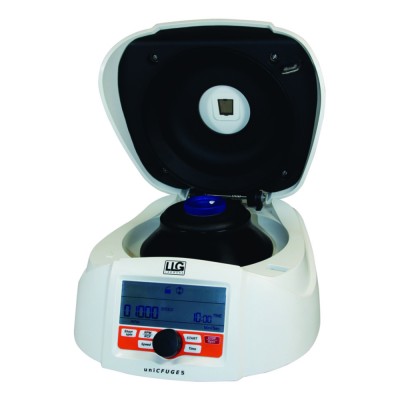
The LLG-uniCFUGE 5 laboratory microcentrifuge is a compact, high-performance centrifuge designed for pharmaceutical laboratories, biotechnology, molecular biology, life sciences, clinical research, analytical laboratories and R&D applications. With speeds of up to 15,000 rpm and a maximum relative centrifugal force of 15,595 × g, it provides a practical solution for rapid centrifugation of small-volume samples and routine laboratory workflows.
A microprocessor-controlled brushless DC motor provides precise speed management, while operators can work directly in either RPM or RCF. The Short-Spin mode supports rapid centrifugation procedures, and the integrated timer can be set from 0 to 999 minutes. Operating parameters are clearly displayed on the large 3.9-inch LCD display, providing an intuitive interface for everyday laboratory use.
The standard fixed-angle aluminium rotor accommodates 12 × 1.5/2.0 ml microcentrifuge tubes. Supplied adapters also allow the use of 0.5 ml and 0.2 ml tubes, making the unit suitable for a wide range of sample preparation and PCR-related workflows. Integrated imbalance detection with automatic shutdown provides additional operational control, while large suction feet help maintain a stable position on the laboratory bench. The included software also enables computer control, storage of up to 99 user-defined programs and operational data recording for Excel.

The LLG-uniCFUGE 5 digital microcentrifuge combines a compact footprint with high centrifugal performance for laboratories requiring reliable processing of small-volume samples. Its speed can be adjusted between 500 and 15,000 rpm, with a maximum acceleration of 15,595 × g. The possibility of operating in either RPM or RCF makes it particularly useful for laboratory protocols in which centrifugation conditions are specified using different measurement parameters.
The standard aluminium fixed-angle rotor is supplied with a lid and accommodates 12 × 1.5/2.0 ml tubes. Twelve adapters for 0.5 ml tubes and twelve adapters for 0.2 ml tubes are included. For PCR workflows, an optional rotor, Code 6.263 535, is available for 16 × 0.2 ml tubes or two 8-tube PCR strips.
For laboratories requiring greater process standardisation and digital documentation, the LLG-uniCFUGE 5 can be controlled via computer using the supplied software. Up to 99 user-defined programs can be stored, while operational data can be recorded for use in Excel. These capabilities can be particularly useful in pharmaceutical, biotechnology and research environments where repeatable laboratory procedures and organised data management are important.
Technical Specifications
Model: LLG-uniCFUGE 5
Speed range: 500–15,000 rpm
Maximum RCF: 15,595 × g
Operating units: RPM or RCF
Mode: Short-Spin with selectable RPM/RCF values
Timer: 0–999 min
Display: 3.9" LCD
Standard rotor: Aluminium fixed-angle rotor with lid
Standard rotor capacity: 12 × 1.5/2.0 ml tubes
Cooling: No
Motor: Brushless DC motor
Dimensions (W × D × H): 262 × 230 × 131 mm
Weight: 4 kg
Power supply: 100–240 V, 50/60 Hz
Warranty: 3 years
Compatible Tube Formats
12 × 0.2 ml PCR tubes
12 × 0.5 ml centrifuge tubes
12 × 1.5 ml centrifuge tubes
12 × 2.0 ml centrifuge tubes
Scope of Supply
The package includes the LLG-uniCFUGE 5 centrifuge, fixed-angle rotor with lid for 12 × 1.5/2.0 ml tubes, power supply with USB cable, 12 adapters for 0.5 ml tubes, 12 adapters for 0.2 ml tubes, T-handle Allen key, software and operating manual.
Optional Accessory
Rotor Code 6.263 535 for 16 × 0.2 ml tubes or two 8-tube PCR strips.
FAQ
• Is the LLG-uniCFUGE 5 suitable for pharmaceutical and biotechnology laboratories?
The LLG-uniCFUGE 5 microcentrifuge is particularly suitable for laboratories that routinely process small-volume samples and require a combination of high rotational speed, compact dimensions and digital control. This makes it relevant for pharmaceutical research, biotechnology laboratories, molecular biology, life sciences, analytical laboratories, university research and R&D. The centrifuge reaches 15,000 rpm and a maximum RCF of 15,595 × g, while the standard rotor accommodates twelve 1.5 or 2.0 ml tubes. Smaller 0.5 and 0.2 ml formats can be used with the supplied adapters. For pharmaceutical and biotechnology workflows, the possibility of selecting either RPM or RCF can be particularly practical because laboratory protocols may specify centrifugation conditions using either parameter. The ability to store up to 99 user-defined programs through the supplied computer software can also help laboratories organise frequently repeated centrifugation procedures. Operational data can be recorded for use in Excel, providing an additional tool for laboratories that need to organise experimental or process information. The suitability of the centrifuge for a specific regulated method or individual pharmaceutical procedure should always be evaluated according to the applicable laboratory protocol and validation requirements.
• Can the LLG-uniCFUGE 5 be used for PCR and molecular biology sample preparation?
Yes. The available tube configurations make the LLG-uniCFUGE 5 suitable for many PCR and molecular biology workflows requiring centrifugation of small sample volumes. The standard rotor accepts twelve 1.5 or 2.0 ml tubes, while the supplied adapters allow twelve 0.5 ml or twelve 0.2 ml tubes to be used. An optional rotor, Code 6.263 535, is specifically available for 16 × 0.2 ml tubes or two 8-tube PCR strips. These configurations make the centrifuge relevant for sample preparation activities commonly encountered in molecular biology, biotechnology and life-science laboratories. The Short-Spin function is particularly useful when a brief centrifugation step is required, while the ability to select RPM or RCF allows operators to follow protocols written using either rotational speed or relative centrifugal force. The instrument does not incorporate refrigeration, so temperature-sensitive workflows should be assessed according to the requirements of the samples and protocol. The aluminium fixed-angle rotor has optimised aerodynamics designed to minimise heat and noise generation during operation. Appropriate tube compatibility, rotor loading and sample balancing should always be checked before centrifugation.
• What is the difference between RPM and RCF, and why is it useful to select both?
RPM indicates the number of revolutions performed by the rotor per minute, whereas RCF describes the relative centrifugal force applied to the sample and is generally expressed as a multiple of gravitational acceleration, × g. These values are related but they are not interchangeable without considering the effective rotor radius. This distinction is important in laboratory work because one protocol may specify a centrifugation step at a certain RPM while another may define the required centrifugal force directly in × g. The LLG-uniCFUGE 5 allows the operator to work using either RPM or RCF, making it easier to reproduce protocols without relying unnecessarily on manual conversions. The instrument operates between 500 and 15,000 rpm and reaches a maximum RCF of 15,595 × g. This combination makes the microcentrifuge suitable for a broad range of small-volume laboratory centrifugation procedures. Correct settings should always be selected according to the sample, tube specifications, rotor configuration and laboratory method. For pharmaceutical, biotechnology and research laboratories, clearly defined centrifugation parameters are particularly important when procedures must be repeated consistently across multiple samples or experimental runs.
• Can the LLG-uniCFUGE 5 be controlled by computer and used for repeatable laboratory protocols?
Yes. In addition to direct operation through its 3.9-inch LCD display, the LLG-uniCFUGE 5 can be controlled from a computer using the supplied software. The system can store up to 99 user-defined programs, allowing frequently used centrifugation settings to be organised for repeated laboratory procedures. This can be particularly useful in pharmaceutical development, biotechnology, analytical research and other laboratory environments where similar sample preparation procedures are performed regularly. An operational output is also available for recording data for use in Excel. These features can support more organised management of centrifugation workflows by reducing the need to manually re-enter frequently used settings. The microprocessor-controlled brushless DC motor manages rotation speeds of up to 15,000 rpm, while the digital interface provides direct access to operating parameters. Computer control and program storage should not be interpreted as automatic compliance with a particular regulatory or data-integrity standard; laboratories operating under GMP, GLP or other regulated systems should assess the instrument, software and documentation according to their own qualification and validation procedures.
• What safety and stability features does the LLG-uniCFUGE 5 provide at high speed?
At rotational speeds of up to 15,000 rpm, correct sample distribution and rotor balancing are essential. The LLG-uniCFUGE 5 therefore incorporates imbalance detection with automatic shutdown. If an imbalance condition is detected, the system stops operation rather than continuing under unsuitable conditions. This electronic function complements, rather than replaces, correct preparation by the laboratory operator. Tubes should be positioned symmetrically, sample volumes should be appropriately balanced and the correct adapters should be used for 0.5 ml and 0.2 ml tubes. The centrifuge also features large suction feet that provide a stable base on the laboratory bench. Its fixed-angle aluminium rotor has aerodynamics optimised to minimise heat and noise generation during operation. The brushless DC motor avoids the use of conventional motor brushes and is controlled by a microprocessor. With dimensions of 262 × 230 × 131 mm and a weight of 4 kg, the centrifuge offers a compact footprint for laboratories where bench space is limited while still providing centrifugal forces of up to 15,595 × g.
Manual piston pump 40 litres / minute
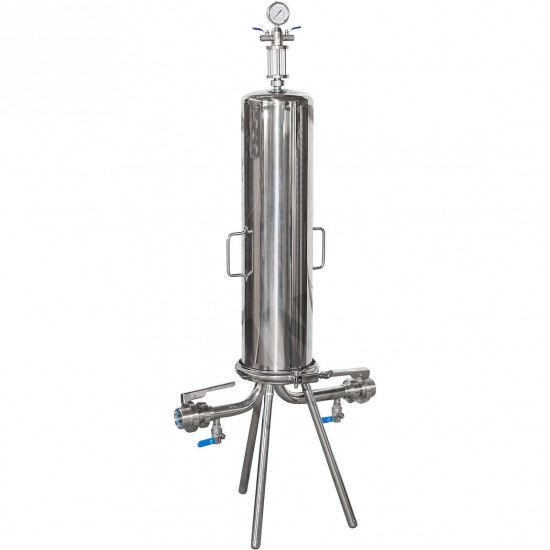
Filter system Housing 1 bell 18 cartridges
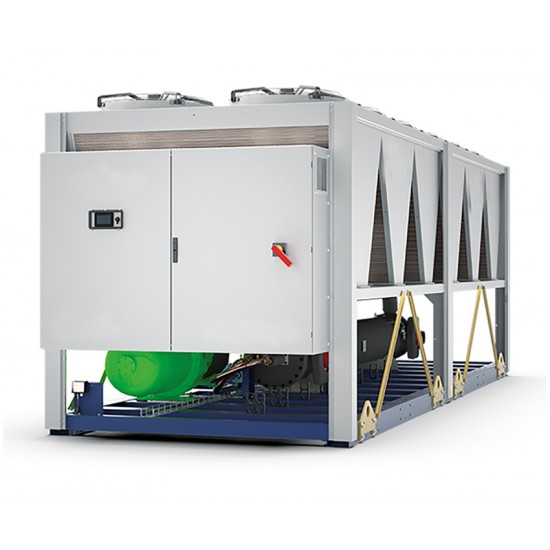
Air-cooled liquid chillers - Super low noise acoustic configuration 382 ÷ 1945 kW

AUTOMATIC LINEAR LABELLER (cylindrical formats - 4000 bottles/hour)


Fixed-stator single-screw pump 10 - 2000 rpm / minute 2 - 42 hectolitres / hour - INVERTER and...
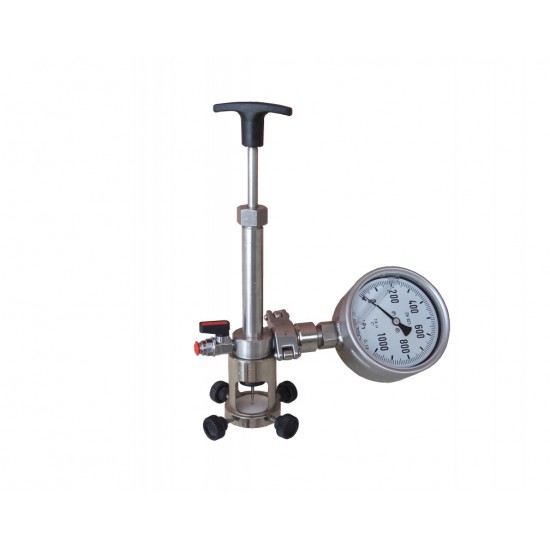
European Community Upgrades Kit Manometer mounted on Cl1 TC3/4 instrument
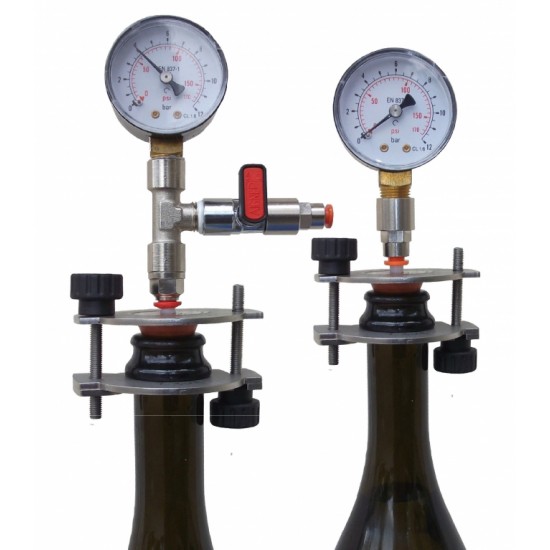
Aphrometer for full bottles without cap

Air-cooled liquid chiller - Silent acoustic configuration 228 – 867 kW
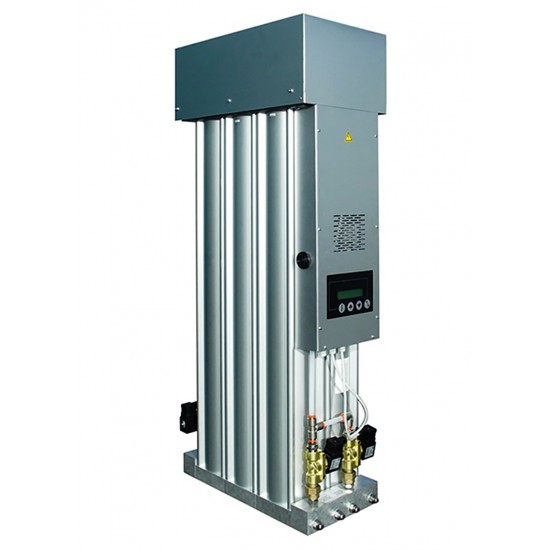
NITROGEN GENERATOR "AP" 3 Nmc/h
Air-cooled liquid chiller - Silenced acoustic configuration 232 – 1334 kW

Manual feeder with 120 holes for capsule sizes ranging from 00 to 4 – 1,500 capsules per hour

Fixed-stator progressive cavity pump with REDUCER and VARIATOR - 0 - 100 hectolitres / hour - 3KW

Air-cooled liquid chiller Cooling capacity 1.8 – 4.4 kW